FAITH & WISDOM | DIVINE PANTHOU
We often speak of harmony as if it were something that governments, religious leaders or community organisations must create for us. But harmony begins much closer to home.
It begins with how we speak to another person.
It begins with whether we listen before answering.
It begins with whether disagreement makes us curious about another person’s position — or gives us permission to insult them.
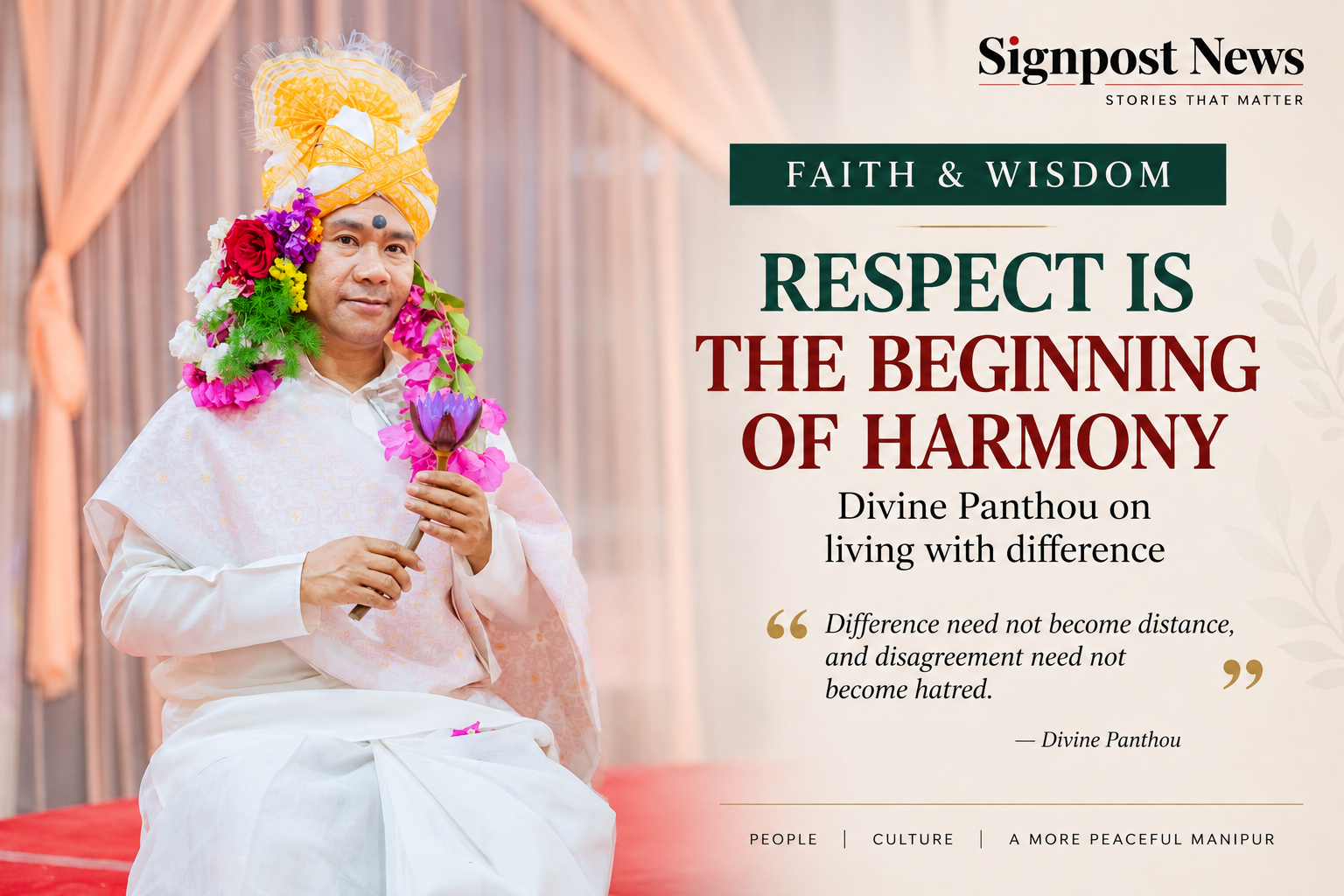
One of Divine Panthou’s teachings brings this responsibility back to everyday human conduct: difference need not become distance, and disagreement need not become hatred.
That message may sound simple. Living by it is much harder.
We Were Never Meant to Be the Same
No two human beings think exactly alike. Families disagree. Neighbours disagree. Communities have different traditions, beliefs and memories.
Difference, therefore, is not itself a social failure.
The problem begins when difference turns into contempt.
Once we convince ourselves that another person is beneath us, words change. Listening stops. Rumours become easier to believe. Humiliation begins to look acceptable. Eventually, people who have lived beside one another can begin to see each other only through suspicion.
Divine Panthou’s teaching asks us to interrupt that process at its beginning.
Before judging another person, we must also examine the intention behind our own words and actions.
Words Can Heal. Words Can Wound.
A wound is not always inflicted physically.
A sentence spoken in anger can remain in another person’s mind long after the argument has ended. Public humiliation can damage dignity. A rumour repeated without checking can harm a family or divide a neighbourhood.
But speech can work in the opposite direction too.
A few restrained words can calm anger. Listening can prevent misunderstanding from becoming conflict. Correcting someone without humiliating them can preserve both truth and dignity.
This is where spiritual teaching becomes practical.
Faith cannot be measured only through prayer or ritual. It must also be visible in the discipline of our speech.
How do we speak when we are angry?
How do we treat someone who cannot answer us back?
What do we say about another person when that person is not present?
These ordinary moments reveal much about us.
Strength Does Not Require Humiliation
There is a temptation to confuse dominance with strength.
A person may win an argument by shouting louder. Someone with social position may silence a weaker person. A majority may make a smaller group feel insignificant.
None of these necessarily demonstrates moral strength.
Divine Panthou’s teaching points towards another measure: the ability to remain fair even when anger and disagreement are present.
Restraint is not weakness.
Listening is not surrender.
Respecting another person does not require agreeing with everything that person says.
It simply means recognising that disagreement does not cancel human dignity.
Harmony Is Built in Ordinary Life
Peace is often discussed only when society is already in conflict. We organise meetings, issue appeals and ask people to restore harmony.
But harmony is usually built — or damaged — much earlier.
It is built when we listen before replying.
It is built when we correct without insulting.
It is built when we refuse to pass on a rumour simply because it confirms what we already want to believe.
And it is built when we recognise dignity in every household.
Divine Panthou’s teaching treats these apparently small acts as fundamental. They determine whether people sharing the same land gradually develop trust or begin living with fear.
That makes respect something much greater than politeness.
It becomes a social discipline.
Manipur Needs This Everyday Discipline
For Manipur, the teaching carries an immediate resonance.
Our society contains different communities, faiths, languages, histories and political opinions. Those differences will not disappear, nor should harmony require them to disappear.
The more important question is how we live with difference.
A society cannot demand peace at the top while practising contempt at the bottom.
Harmony cannot survive if rumours travel faster than truth, if every disagreement becomes an attack on identity, or if humiliation is celebrated because the person being humiliated belongs to another group.
The work of peace therefore begins long before negotiations and public declarations.
It begins in ordinary conduct.
Respect Comes Before Harmony
Divine Panthou’s teaching leaves us with a demanding idea.
We cannot control every disagreement around us. We cannot make everyone think like us. We cannot remove every difference between communities.
But we can decide what we do with those differences.
We can listen before answering.
We can seek truth before repeating a claim.
We can correct without humiliating.
We can disagree without hatred.
And we can refuse to deny another person the dignity that we demand for ourselves.
Difference need not become distance. Disagreement need not become hatred.
If harmony is what we seek, respect may be where we have to begin.
This article is part of Signpost News’ Faith & Wisdom series, presenting teachings and reflections on faith, humanity, ethical living and the natural world.