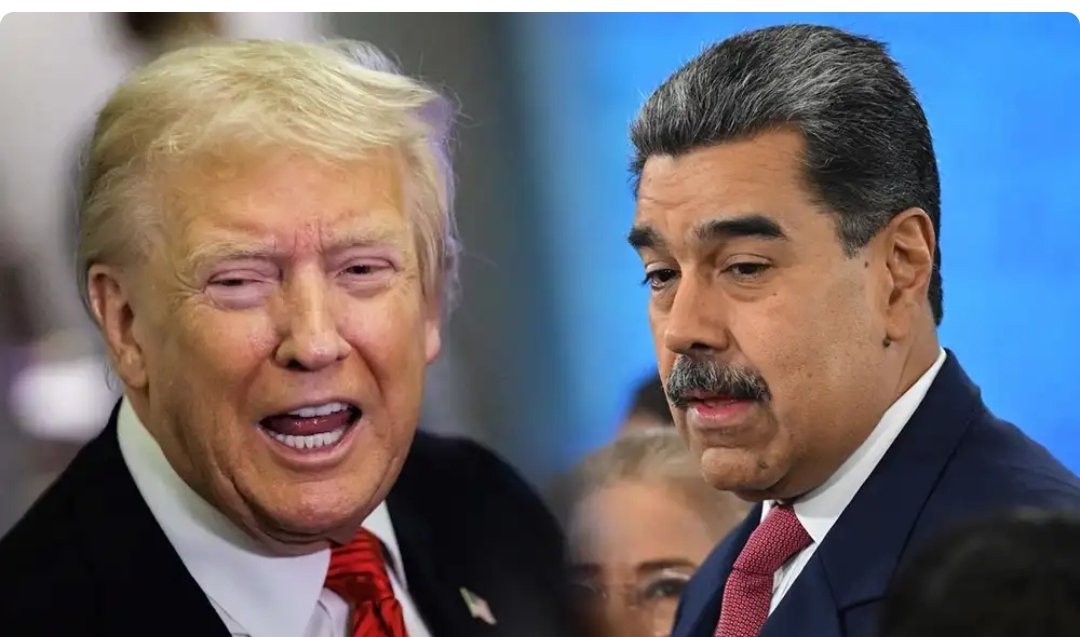
The U.S. military strike on Venezuela on January 3, 2026, which resulted in the capture of President Nicolás Maduro, has ignited global debates about a potential resurgence of American interventionism. This operation, framed by President Donald Trump as a targeted effort to combat narco-terrorism and enforce U.S. indictments, marks a bold escalation in foreign policy.
Critics argue it harkens back to historical U.S. actions in Latin America, such as the 1989 Panama invasion or the 2003 Iraq war, while supporters see it as a necessary assertion of power against rogue regimes. But does this signal the dawn of a new era of U.S. interventionism?
The Venezuela strike fits this pattern: Trump cited Maduro’s alleged ties to drug cartels and indictments from 2020, emphasizing no U.S. fatalities and minimal collateral damage.
And could it serve as a deterrent—or “lesson”—to other nations the U.S. has allegedly targeted, such as Bangladesh and Nepal, where recent political upheavals have been linked by some to American.
The U.S. has a long history of intervening in foreign affairs, particularly in its “backyard” of Latin America and the Caribbean. From the Monroe Doctrine in the 19th century to Cold War-era operations like the Bay of Pigs in Cuba (1961) or support for coups in Chile (1973) and Guatemala (1954), Washington has often justified actions as protecting democracy, combating communism, or now, fighting drugs and terrorism.
While the action succeeded in a region long viewed as Washington’s “backyard,” experts and analysts widely agree that replicating such overt military engagement in South Asia, including nations like Bangladesh or Nepal, would be far riskier and likely counterproductive.
The key deterrent is the region’s complex web of great-power rivalries, particularly involving nuclear-armed India and China, where any full-scale U.S. intervention could rapidly escalate into a broader conflict with catastrophic consequences.
Moreover, South Asia hosts three nuclear powers (India, Pakistan, China). U.S. intelligence assessments warn that conflicts could escalate horizontally (involving multiple adversaries) or vertically (to nuclear use). Atlantic Council reports emphasize rising risks of limited nuclear strikes in Asia, far higher than in non-nuclear Latin America.
However, it diverges by being overt and unilateral, bypassing the UN Security Council and drawing immediate international condemnation from Russia, China, Iran, and even some European allies.
Proponents argue this isn’t a “start” but a continuation under Trump’s “America First” doctrine, amplified by his second term. With control of Congress and a focus on border security, the administration views Venezuela as a direct threat due to migration and crime linked to groups like Tren de Aragua. Experts at Chatham House note the operation’s precision—using Delta Force and airstrikes on military sites—suggests it’s a one-off rather than a broad doctrine shift.
Yet, the timing, just days into 2026, amid ongoing global fractures like trade wars and conflicts in Ukraine and the Middle East, raises fears of escalation.
Trump has hinted at involvement in Venezuela’s oil sector post-strike, which could signal economic motivations beyond justice.
Critics, including UN officials and legal scholars, warn of a “Putinization” of U.S. policy—mirroring Russia’s actions in Ukraine by prioritizing force over diplomacy.
This could embolden a more aggressive stance globally, especially toward nations aligned with U.S. adversaries like China or Russia.
In South Asia, where geopolitical tensions involve India, China, and the U.S., such moves might intensify proxy influences. However, domestic polls show limited American appetite for foreign entanglements, and without clear follow-ups (e.g., strikes elsewhere), Venezuela may remain isolated rather than inaugural.
In contrast, South Asia is a theater of intense great-power competition. The U.S. views the region as vital for its Indo-Pacific strategy to counter China, but direct military action lacks the unilateral freedom seen in Latin America.
South Asia’s jostling between India and China is “crucial to the fate of Washington’s strategy to keep the region ‘free and open’ from Chinese coercion.” U.S. policy prioritizes partnering with India as a counterweight to Beijing, not overriding regional dynamics through force.
The two Countries, Bangladesh and Nepal is an example of U.S.-targeted nations, where governments were allegedly toppled with American backing. These claims stem from recent upheavals: Bangladesh’s “July Revolution” in 2024, which ousted Prime Minister Sheikh Hasina amid student-led protests over job quotas and corruption, and Nepal’s “Gen Z Uprising” in 2025, which collapsed the government in under 48 hours due to economic grievances and anti-corruption demands.
In Bangladesh, Shaikh Hasina herself accused the U.S. of engineering her ouster, claiming she refused demands to cede control of Saint Martin Island and allow a foreign airbase.Her son echoed this, blaming the Biden administration for funding riots.
A former Bangladeshi minister alleged involvement by USAID and the Clinton family in a “carefully planned coup.” Leaked documents point to millions funneled through the National Endowment for Democracy (NED) and affiliates for “democracy promotion” activities, including training opposition groups.
The Observer Research Foundation (ORF) detailed USAID and NED’s role in supporting civil society, which some interpret as regime-change funding.
The U.S. has vehemently denied these allegations, calling them “laughable” and emphasizing support for democratic processes, not interference. Reports from outlets like People’s World and CEU’s RevDem highlight U.S. sanctions and visa restrictions on Bangladeshi officials for human rights abuses, which critics say aggravated political upheaval but weren’t direct meddling.
Post-Hasina, U.S.-Bangladesh ties are resetting under the interim government, with aid continuing.
In Nepal, similar accusations emerged during the 2025 protests, which led to mass civilian deaths and a social media ban. Sputnik News reported leaked IRI documents showing U.S.-funded programs training youth in protest tactics years earlier, allegedly to counter Chinese and Indian influence.
Sources making these claims include ousted leaders (Hasina), former officials (Mike Benz), think tanks (ORF), media (Sputnik, Republic TV), and leaked docs from NED/IRI/USAID affiliates. However, outlets like The Print dismiss them as “absurd conspiracy theories,” arguing the U.S. lacks the leverage for such operations in South Asia.
If “teaching a lesson” means deterring regimes from actions opposing U.S. interests—such as aligning with China or Russia, suppressing dissent, or enabling migration/drug flows—Venezuela could indeed signal heightened nations. The strike sets a precedent for unilateral actions, potentially pressuring South Asian nations amid U.S.-China rivalries.
In Bangladesh, where the post-Hasina government leans toward Islamists and China benefits from the vacuum, a tougher U.S. stance might encourage compliance on issues like counterterrorism.
Nepal, grappling with economic fallout from its uprising, might see increased U.S. aid tied to reforms, but also scrutiny if it drifts toward Beijing.
Conversely, it could backfire, fostering anti-U.S. sentiment and alliances with rivals. Allianz Global Investors notes market instability from Venezuela, which might deter broader interventions due to economic costs.
In South Asia, allegations of prior U.S. meddling already fuel paranoia; overt actions like Venezuela’s could unite regional powers against perceived imperialism.
Venezuela amplifies U.S. assertiveness but doesn’t necessarily inaugurate unchecked interventionism—legal and diplomatic blowback may constrain it.
For Bangladesh and Nepal, it might prompt caution in foreign alignments, but genuine lessons lie in addressing internal grievances like inequality, rather than blaming external forces. Multilateral approaches, not unilateral strikes, offer a more sustainable path to stability.
In a multipolar world, the U.S. must weigh intervention’s short-term gains against long-term alienation.
Whether Venezuela deters or provokes remains unfolding, but history suggests force alone rarely “teaches” lasting lessons.