Nineteen people are dead and around 640 have been hospitalised in Manipur’s suspected spurious liquor tragedy. Twelve were in intensive care when officials gave their November 21 update. The deaths were reported from Chakpikarong subdivision and adjoining areas of Chandel district. Methanol poisoning is suspected. Officials said medical and forensic findings were still awaited to establish the exact cause and identify any toxic substance in the liquor.
The government has ordered an inquiry. It must establish where the liquor came from, who supplied it and how widely it was sold. It must also answer a question that predates this tragedy by seven years. When Manipur was already warned that adulterated liquor could take lives, what did it do to keep the next dangerous batch from reaching people
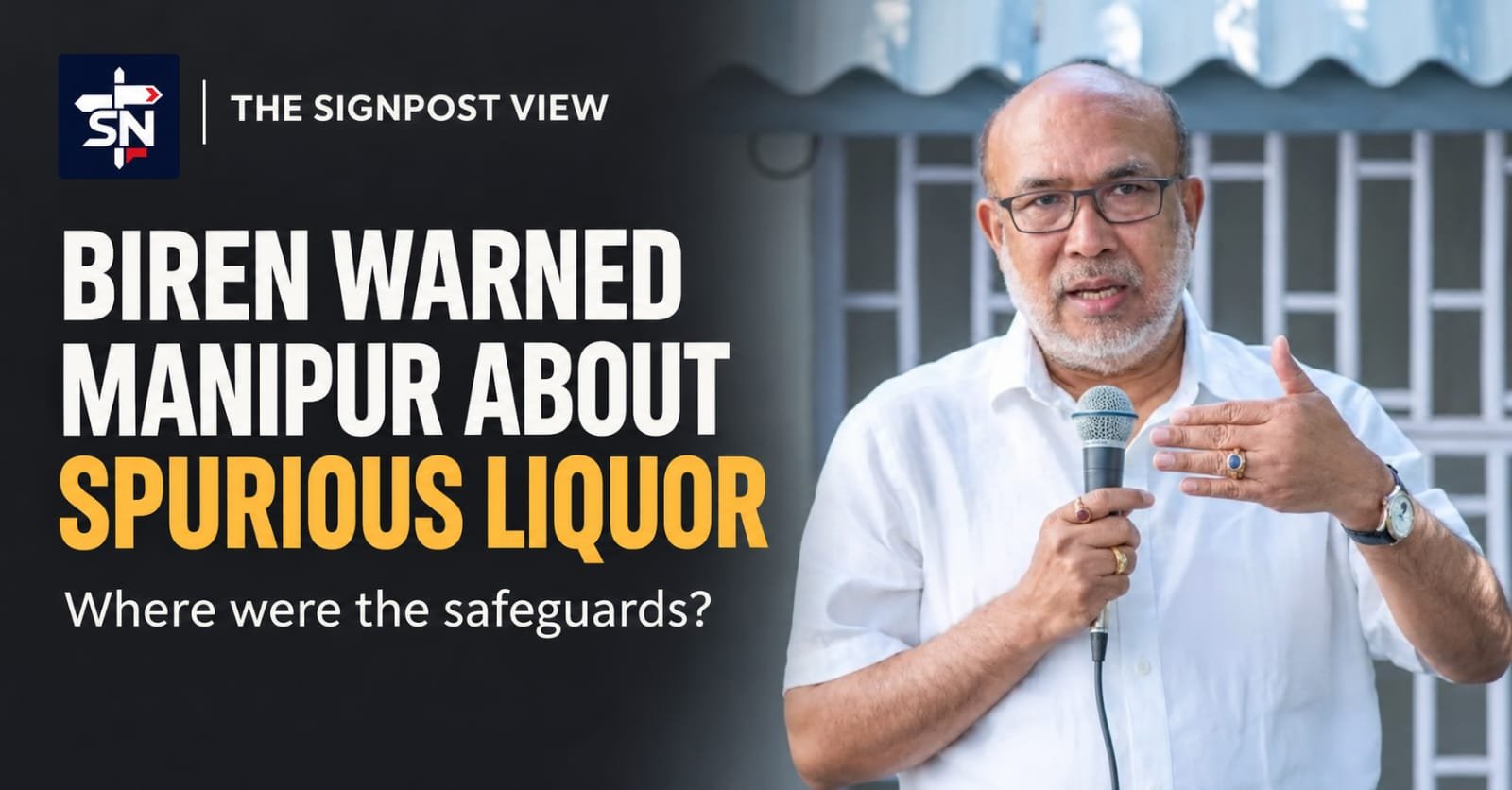
What N Biren Singh saw early
On September 13, 2019, after police uncovered units making suspected spurious liquor, then Chief Minister N. Biren Singh warned that local brewing, practised customarily by some communities, had expanded into an unchecked commercial trade in which adulteration had become a concern. He also drew attention to clandestine units making counterfeit Indian-made foreign liquor. He said spurious and adulterated alcohol could cause serious illness and take lives, and called for a policy worked out with experts and civil society. In March 2023, after another raid in Khongjom, he again warned of the danger and said samples had been sent outside Manipur for testing.
Biren deserves credit for recognising that demand had survived prohibition and that people were buying liquor whose contents and source they had little way of checking. When his Cabinet backed a partial relaxation in September 2022, minister Letpao Haokip cited liver and kidney disease among the government’s concerns. An expert panel that briefed Biren in April 2023 reported finding toxic chemicals in some samples of locally brewed liquor. The chronic harm raised in those discussions and the acute poisoning now suspected in Chandel are distinct medical questions. Both made a case for testing what was being sold.
What Manipur put on paper
The 2022 draft policy envisaged government-licensed outlets and food-safety certification for the manufacture and sale of local liquor. On December 6, 2023, the state withdrew the 1991 prohibition law from specified areas under a Gazette notification covering Greater Imphal, district headquarters, tourist locations and registered hotels with at least 20 lodging rooms. The Excise Department’s 2025–26 report records licences for one bonded warehouse, one wholesaler and four retail shops for Indian-made foreign liquor and beer. Its staffing table also records 592 vacancies against 707 sanctioned posts as of February 28, 2026. How much of the promised quality-control system for local liquor was actually put into operation, and who was available to enforce it?
The Coalition Against Drugs and Alcohol, Nupi Samaj and other women’s groups protested the move. They feared that wider availability would deepen harms they were already seeing in their communities. CADA also warned that the policy could benefit a small group of businesses. Those concerns deserved an answer then and deserve one now. Any licensing system must show how outlets are selected, how sales are controlled and how violations are detected. The protests cannot explain an enforcement failure that the inquiry has yet to establish.
What the inquiry owes families
Police have arrested six people and are tracing a suspected supply chain through Kakching district. The government has given its inquiry committee a month. It should make the findings public and show when excise officers last inspected the relevant markets and premises before people fell ill, whether liquor from those points had ever been sampled, and how quickly health officials connected the first cases across localities. The state should publish a current register of licensed outlets, inspection and testing figures, and the action taken when unsafe liquor is found.
A system that tests liquor, traces batches and acts on illegal sales gives Manipur a chance to intercept a dangerous supply before it reaches another village. Whether those safeguards could have stopped this particular batch is a question for the inquiry. N Biren Singh saw the danger early enough for the state to act. The families of those who died are owed a public account of what was done with that warning.