On October 31, thousands of people led by COCOMI, JTCM, FNCC, NHAM marched demanding abrogation of the Suspension of Operations agreement with Kuki armed groups. They sought justice, civilian security and a government response to their concerns about the arrangement. Three days later, Chief Minister Yumnam Khemchand Singh reportedly instructed security officers to identify armed groups suspected of involvement in recent violence, “excluding those engaged in peace talks.” That exclusion requires an explanation.
For those who joined the rally, the wording could reasonably sound like an indirect answer to their demands. While protesters were asking the government to reconsider SoO and act against armed groups, the government appeared to place negotiating organisations outside a particular exercise intended to establish responsibility for violence.
Was this a signal that their demands would not be accepted?
The statement does not explicitly reject abrogation or closure of designated camps. It does not establish an intention to protect any organisation. But the impression it creates matters, particularly when bereaved families are still waiting for justice. Four deaths have been reported in connection with the Sunurok attack. The Nongshum Joint Action Committee has maintained its refusal to claim the victims’ bodies until the government acts on its demands. Those families deserve to know whether every credible lead will be investigated, including any lead involving an organisation participating in peace talks.
Exclusion before the evidence is examined
The most troubling aspect of the reported directive is where the exclusion begins.
It appears in the instruction to identify active armed groups suspected of involvement in recent violence and prepare a detailed report. The Chief Minister reportedly said the findings could lead to further action, including consideration of declaring implicated groups unlawful. He also issued a broader warning against any group continuing attacks on civilians.
The warning is welcome. The scope of the report remains unclear.
If negotiating groups are excluded at the identification stage, how will the report examine credible evidence pointing towards their involvement? If that report subsequently informs government action, could the initial exclusion also narrow the response?
These questions concern the practical consequences of the instruction. A report that begins with an excluded category may leave important evidence to another process. The government must explain whether that separate process exists, who conducts it and how its findings inform decisions.
It should also specify which organisations the phrase “engaged in peace talks” covers. Does it include SoO signatories, groups under other ceasefire arrangements, or another defined category? The public should not have to guess.
Participation in negotiations cannot settle an allegation of involvement in violence. Investigators must be able to identify suspects, examine organisational links and pursue the appropriate action wherever credible evidence leads them.
The government’s own record raises questions
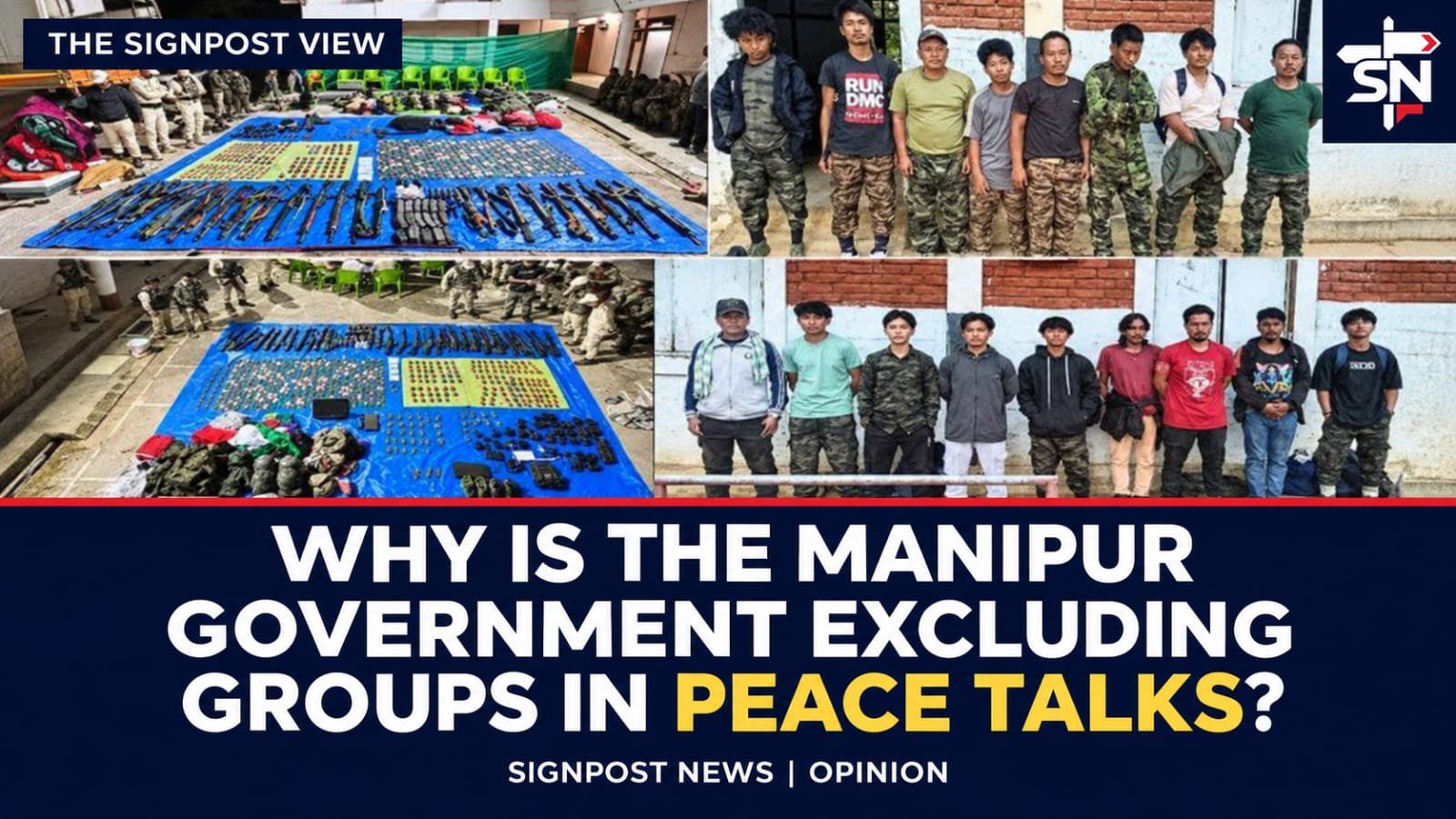
The concern about designated camps rests on more than public suspicion. Manipur Police’s account of the October 23 operation at Sinai camp identifies it as a designated SoO camp of KNO/KNA and KNO/KLA. Police reported arresting 17 people for allegedly impersonating registered cadres through false identities. They also reported recovering 24 firearms, ammunition, explosives and other equipment. The investigation covered camp functionaries, unauthorised possession of arms and possible violations of SoO ground rules.
These allegations require proof. They do not establish the guilt of everyone associated with the camp. They nevertheless raise specific questions about verification, supervision and weapons control.
How did alleged impersonators remain inside a designated camp? Who was responsible for checking their identities? Were the weapons properly recorded and held according to the applicable rules? What responsibility, if any, rests with camp functionaries?
The government’s own police record supplies the reason to pursue those questions. There is also an important statement from within the government. On October 23, Home Minister Govindas Konthoujam reportedly said that three people arrested in connection with the Sunurok attack were KNF cadres, although their precise faction remained unconfirmed. The report linked the suspected perpetrators to a faction associated with SoO.
That was a preliminary investigative account, not a conviction. It nevertheless provided an official reason to examine possible organisational links. The government should explain how the subsequent directive accommodates that inquiry. Arresting individual suspects cannot conclude an investigation into who may have supplied weapons, facilitated movement, provided shelter or issued instructions, if evidence points towards such involvement.
The six Liangmai deaths remain relevant
The abduction and killing of six Liangmai Naga civilians had already brought allegations against KNF-P into the centre of Manipur’s public debate.
According to the account presented in the Assembly on September 3, around 18 people, primarily Liangmai Naga civilians returning from a wedding, were abducted from Leilon Vaiphei on May 13. Twelve were subsequently released, while six were found dead. The Home Minister told the House that four suspects had been arrested and investigators were examining leads concerning four more people. He also said the NIA had not, at that stage, shared findings confirming the alleged involvement of KNF-P leaders.
The United Naga Council specifically accused KNF-P in its representations to the Union Home Minister and the Chief Minister. That accusation must remain attributed to the UNC unless established through investigation and the judicial process.
But an allegation of this seriousness requires examination. Negotiating status cannot become a reason to leave a credible allegation unexamined.
A published record of the September 26 tripartite talks between the Centre, the Manipur government and the UNC makes the accountability question sharper. It recorded government assurances about strict enforcement of SoO ground rules and proceedings against everyone found responsible for the six civilians’ deaths, irrespective of affiliation or status.
Does that assurance still govern every investigation? If it does, how does the November 3 exclusion fit within it?
The public should not have to reconcile an assurance of accountability irrespective of affiliation with a subsequent instruction that distinguishes organisations by their participation in talks.
What answer is being given to the rally?
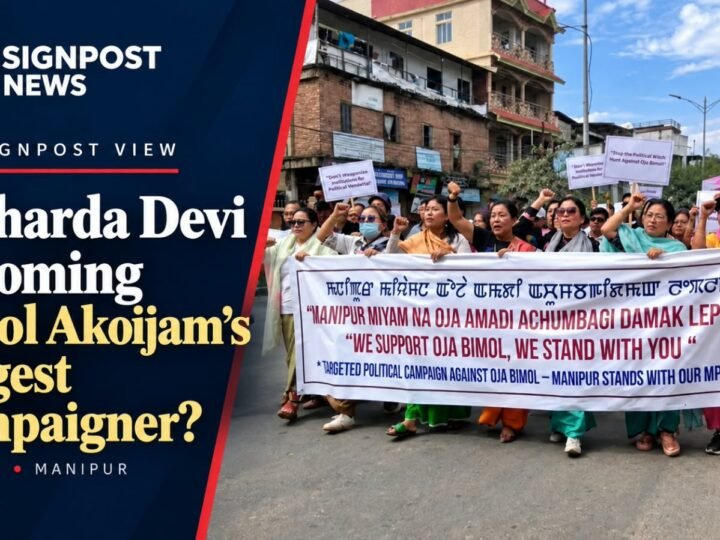
The October 31 mobilisation brought together participants across Meitei, Muslim and tribal communities, alongside support from Naga organisations. A related rally took place in Senapati. The demand for SoO abrogation therefore requires a substantial political response.
The government is entitled to argue that negotiations remain necessary. It must explain how the arrangement protects civilians, how compliance is verified and what consequences follow when violations are established.
Continuing dialogue does not prevent investigators from examining alleged crimes. Nor does it remove the government’s responsibility to review camp arrangements and consider corrective measures when evidence warrants them.
If the government disagrees with the protesters’ demands for abrogation and camp closure, it should say so openly and give its reasons. If those options remain under consideration, it should explain the criteria and process.
People who marched for their safety deserve a reasoned answer. They should not have to interpret a qualification in a security briefing to discover their government’s position.
The question is direct: was the exclusion limited to a particular security exercise, or was it a signal that the government had already declined the protesters’ demands?
Who authorised the distinction?
It is fair to ask whether the exclusion reflects a state government decision or a position agreed with the Centre. SoO involves both governments, making their respective roles relevant.
No publicly verified instruction from Delhi directing this exclusion has been established in the material examined for this editorial. Pressure cannot be asserted merely because the wording raises suspicion.
The state government should disclose who authorised the distinction, why it was considered necessary and what it means for ongoing investigations. That explanation would do more to address public suspicion than another general assurance of commitment to peace.
The Nongshum JAC also needs an account of the government’s promises. On November 4, it rejected another meeting invitation. Co-convenor L. Amarjit alleged that only one assurance, concerning an outpost at Nongshum, had been implemented. That is the committee’s account and calls for a point-by-point government response.
The government should publish what has been completed, what remains pending and when the remaining protective measures will be delivered. Every armed organisation must face the same evidentiary standard. Ethnicity cannot establish guilt. Participation in negotiations cannot establish innocence. Individual and organisational responsibility must be determined by evidence.
For the families of Nongshum, the essential assurance is straightforward: every credible lead will be pursued, whatever the affiliation or negotiating status of those implicated.
The Manipur government must make that assurance unequivocal—and demonstrate it through action.