New book by Naorem Mohen and Anthony Naulak examines Paite-Zomi historical roots, shared heritage and brotherhood; authors pledge part of proceeds for displaced families
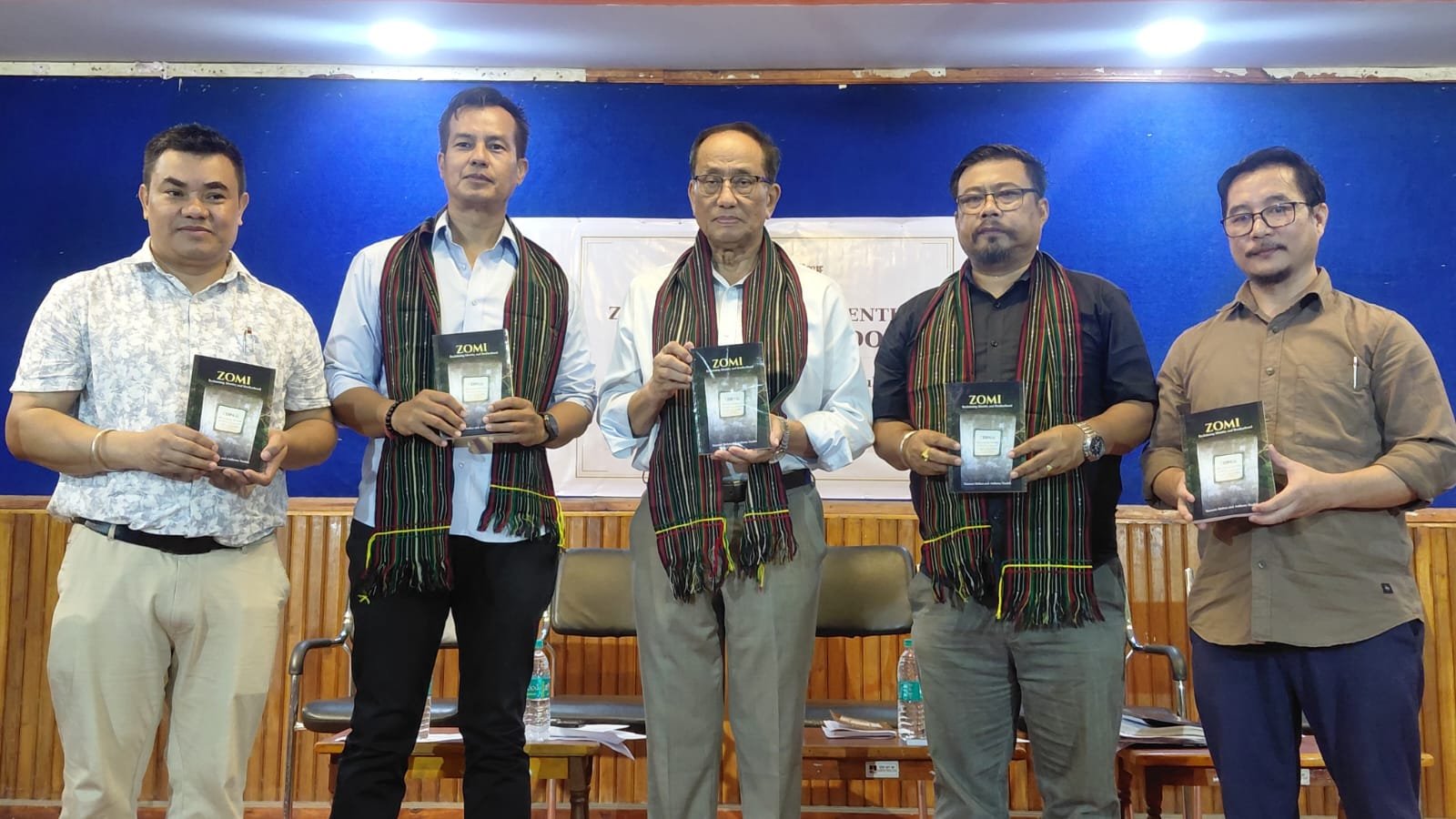
IMPHAL, October 12, 2026: The need to examine Manipur’s history through evidence rather than competing ethnic narratives emerged as the central message at the launch of Zomi: Reclaiming Identity and Brotherhood, a book co-authored by journalist Naorem Mohen and Anthony Naulak, at the Manipur Press Club on Monday.
Bringing together historians, scholars and community representatives at a time when Manipur continues to grapple with the consequences of the ethnic violence that began in May 2023, the programme highlighted the importance of protecting distinct cultural identities without allowing historical disagreements to undermine coexistence and the possibility of a shared future.
Former United National Liberation Front (UNLF) chairman R.K. Sanayaima Singh, popularly known as Meghen, attended the programme as Chief Guest, while Dr. Kiran Yendrembam presided over the function.
The book examines the historical roots of the Paite-Zomi community and its longstanding connections with Manipur, while seeking to encourage further research into historical relationships that have often received limited attention in mainstream accounts of the state’s past.
History Must Be Examined Through Evidence
Reviewing the book, historian Dr. Takhellambam Bhabhananda cautioned against interpreting historical narratives as instruments for establishing exclusive ethnic or territorial claims.
He observed that the term Zomi carries linguistic, cultural, ethnic and political significance for communities identifying with it. However, the existence of a collective identity does not, by itself, establish exclusive ownership of territory, political sovereignty or a uniform historical experience among all communities associated with that identity.
Such questions, he maintained, required separate examination through historical documents, oral traditions, linguistic evidence and other available sources. The same standards of verification, he stressed, must be applied to the historical claims of every community in Manipur.
Dr. Bhabhananda argued that the histories of Manipur’s hills and valley could not be understood as entirely separate experiences. Their relationships had involved political connections, trade, cultural exchanges, customary arrangements and periods of conflict.
Describing Manipur as a composite civilisation shaped by generations of interaction among different peoples, he emphasised that acknowledging historical connections should not mean overlooking inequalities, competing memories or the distinct experiences of individual communities.
He also cautioned against ethnic exclusivity, maintaining that citizenship, equality before the law and fundamental rights could not depend upon ethnic identity.
In his concluding observations, Dr. Bhabhananda called for historical scholarship that remains open to evidence and disagreement while recognising the interdependent character of Manipur’s society.
Meghen Emphasises Historical Relationships and Coexistence
Chief Guest R.K. Sanayaima Singh reflected on the historical relationships among the Meiteis, Meitei Pangals and the diverse communities inhabiting Manipur’s surrounding hills.
He emphasised the importance of recognising their distinct identities while understanding the political, social and cultural connections that had developed over generations.
His observations placed the question of Zomi identity within the broader historical experience of Manipur and the Northeast, where communities have maintained relationships across geographical and political boundaries.
Referring to the violence and displacement that have affected Manipur since May 2023, he underscored the need for mutual understanding and peaceful coexistence rather than allowing contemporary divisions to determine how communities interpret their shared past.
In his presidential address, Dr. Kiran Yendrembam emphasised that historical writing carried a responsibility to distinguish documented evidence from interpretations shaped by contemporary political interests.
He observed that the history of a community involved not only political events but also migration, cultural practices, social relationships and memories transmitted across generations.
Welcoming efforts to document lesser-explored aspects of Manipur’s past, he encouraged historians and younger researchers to examine such publications critically and constructively.
Meitei Kings Protected Diverse Identities, Says Mohen
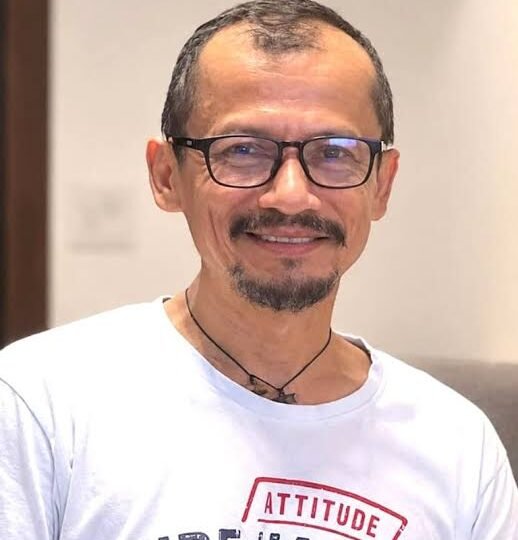
Co-author Naorem Mohen said the publication was motivated by concern over the distortion of Manipur’s history and the need to recover historical relationships through careful research.
He referred to the role played by Meitei kings in protecting and encouraging the identities, customs and traditions of different communities living within the historical kingdom.
According to Mohen, these relationships deserved greater attention in discussions of Manipur’s past, particularly at a time when historical interpretations have increasingly become intertwined with contemporary ethnic and political disagreements.
He maintained that examining the historical roots of the Paite-Zomi community was not intended to diminish the historical position of the Meiteis or any other community, but to contribute towards a fuller understanding of the state’s shared heritage.
Mohen also emphasised that historical writing should not become a means of deepening contemporary ethnic divisions, particularly when communities that had lived in close social and cultural contact for generations were now separated by mistrust and violence.
Understanding Manipur’s past, he said, required recognising the contributions and experiences of different communities rather than reducing the state’s history to competing claims of identity and belonging.
Oral Traditions Are Also Historical Sources, Says Anthony Naulak
Co-author Anthony Naulak said the book sought to address gaps in the historical documentation of the Paite-Zomi community, particularly in the context of contemporary narratives questioning its historical connections with Manipur.
He argued that the absence of extensive written records should not be mistaken for the absence of history.
Naulak pointed to oral traditions, clan genealogies, village names, traditional songs, customary institutions and collective memories as important sources deserving scholarly investigation.
He urged universities, historians and younger researchers to examine royal chronicles, colonial archives, historical maps and village records alongside oral histories, while also documenting the knowledge of community elders before it disappeared.
Explaining the significance of the book’s title, Naulak said reclaiming brotherhood was inseparable from the effort to understand identity.
The publication, he maintained, was not intended to position one community against another, but to revisit historical connections and relationships that risk being forgotten amid the present conflict.
He expressed hope that the book would encourage readers to examine history with an open mind and recognise that recovering one community’s historical experience need not come at the expense of another.
Part of Book Proceeds to Support Displaced Families
In a humanitarian commitment, Naulak announced that a portion of the proceeds from the sale of the book would be used for the welfare of internally displaced persons affected by the violence in Manipur.
He said efforts would be made to extend assistance to displaced families in Imphal, Churachandpur and Kangpokpi.
The announcement connected the publication’s message of brotherhood with practical support for people who continue to face hardship and displacement more than three years after the outbreak of violence in May 2023.
Messages concerning the publication were also shared during the programme.
The Zomi Students’ Federation General Headquarters welcomed the book as a contribution to the study of Zomi history, identity and sociopolitical relationships, while Ashang Kasar expressed hope that it would encourage peace, mutual understanding and coexistence.
Zomi Council chairman Vumsuan Naulak also conveyed his hope that the publication would become a useful reference for further historical and academic inquiry.
A Shared Past Amid Present Divisions
The discussions at the launch reflected a wider challenge facing historical scholarship in Manipur and the Northeast, where questions of indigeneity, migration, ethnicity and territorial belonging have increasingly become intertwined with contemporary political disagreements.
While the speakers approached these questions from different perspectives, a recurring emphasis was that historical inquiry must remain open to evidence, scholarly disagreement and the recognition of multiple experiences rather than being reduced to narratives of exclusive ownership or permanent separation.
The publication comes at a time when the consequences of the 2023 violence continue to affect displaced families and relationships among communities.
Zomi: Reclaiming Identity and Brotherhood adds another perspective to the ongoing discussion about Manipur’s history, identity and coexistence. Its arguments, like other interpretations of the state’s past, remain open to scholarly examination, debate and verification.
Editorial disclosure: Naorem Mohen, co-author of the book, is also the Editor of Signpost News. This report covers the public launch programme and attributes historical interpretations and opinions to the respective speakers.