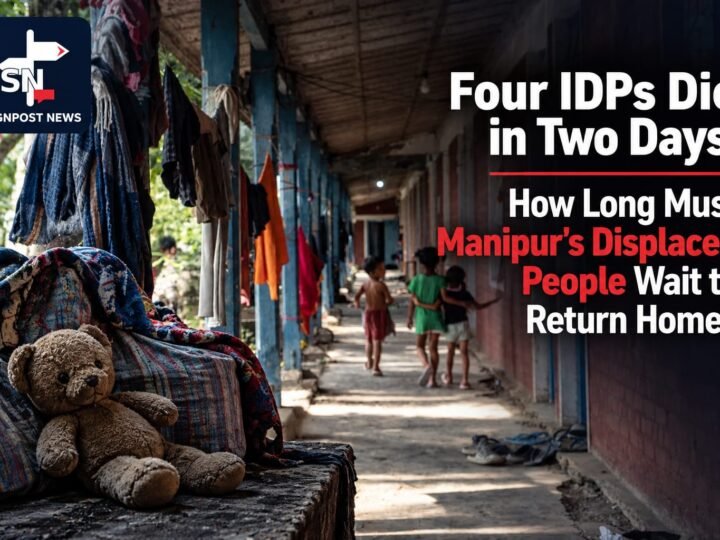
Manipur’s progress in rehabilitating IDPs deserves recognition. But families cannot be asked to leave relief camps before safe and suitable alternatives are ready.
When Chief Minister Yumnam Khemchand Singh informed the Manipur Legislative Assembly that 36,000 of the nearly 60,000 internally displaced persons had been resettled, it offered a measure of hope after more than three years of conflict and uncertainty.
Every family that has been able to return home, move into safer accommodation or begin rebuilding its life represents genuine progress. The government’s efforts to restore livelihoods, provide financial assistance and initiate dialogue with associations of displaced persons must therefore be acknowledged.
But a representation submitted by residents of a relief camp in Churachandpur raises an uncomfortable question: how exactly is Manipur defining resettlement?
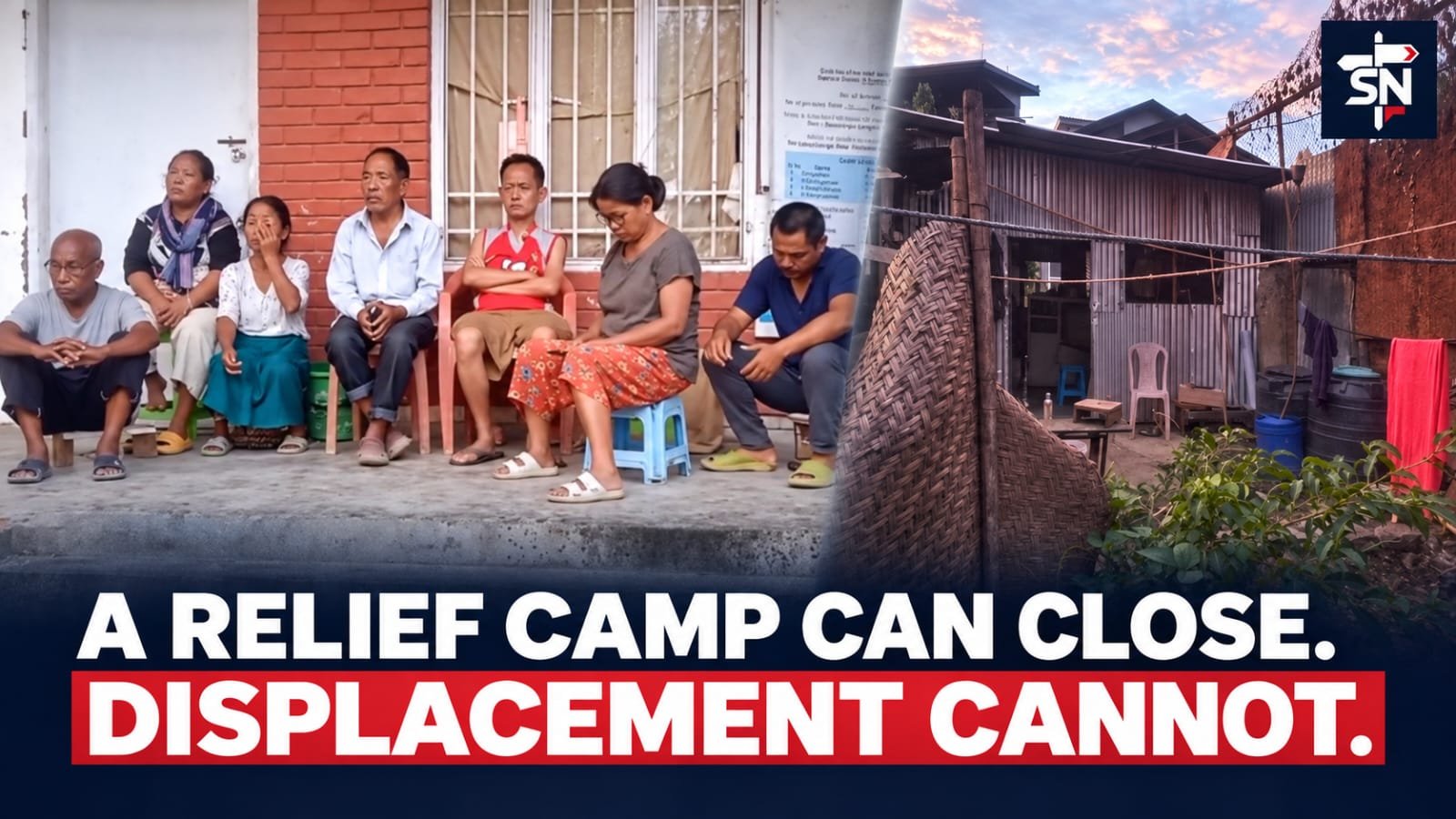
On September 11, internally displaced persons staying at the Sadbhavna Mandap Relief Camp in Khominthang wrote to the Deputy Commissioner of Churachandpur, seeking an alternative arrangement.
The families stated that they had been living in the camp since 2023 and continued to depend on it for shelter. According to the representation, the camp housed around 13 families comprising approximately 50 displaced persons.
They also stated that they had been asked to vacate the camp about a month earlier, without a safe and suitable alternative having first been arranged. The document does not identify who issued the instruction or explain the reason for it. The residents said the proposed vacation had aggravated their difficulties because they lacked the financial means to secure safe and affordable accommodation on their own.
This is not merely an administrative misunderstanding. It goes to the heart of what the government means when it says an IDP has been “resettled”.
Removing a person from a relief camp is not rehabilitation
A relief camp is meant to be temporary. No government should consider keeping thousands of citizens in camps indefinitely as an acceptable solution. Camp life restricts privacy, livelihood, education and the normal rhythms of family life. The government is right to work towards the closure of such camps.
But a camp should close because its residents have found a safe and sustainable solution, not because they have simply been asked to leave.
The difference is fundamental. A family that returns voluntarily to a secure home, receives assistance to rebuild its livelihood and regains access to education and healthcare may reasonably be described as rehabilitated. A family shifted into suitable transitional housing with adequate services may be in the process of resettlement.
A family that leaves a camp for a rented room it cannot afford, stays with already burdened relatives or moves into another temporary arrangement has not ceased to be displaced. Its displacement has merely become less visible.
In fact, the Chief Minister’s own statement in the Assembly indicates that physical return alone does not complete rehabilitation. Although 36,000 people were said to have been resettled, the government continues to provide financial assistance to nearly 59,000 displaced persons because many of those who returned still lack livelihood and earning opportunities.
That admission is important. It recognises that resettlement is not simply about changing a person’s location. It is about restoring the minimum conditions required for independent and dignified life.
Can Rs 84 a day secure food and shelter?
The Khominthang families said they have been receiving Rs 84 per person per day through Direct Benefit Transfer since November 2025. They claimed that after the DBT system was introduced, they stopped receiving rice, dal and other basic food supplies from the administration.
The amount is expected to cover food and other necessities. The residents, however, said it was insufficient for healthcare, clothing, transportation, children’s education and unavoidable household expenses.
The question of equal treatment also cannot be avoided. IDPs in Imphal East had earlier received a ration allowance equivalent to Rs 100 per person per day before it was reduced to Rs 84 under the new DBT system. A representation submitted by Churachandpur IDPs in March, however, stated that some relief camps continued to receive the higher Rs 100 rate. If some camps are still receiving Rs 100 while families at Sadbhavna Mandap receive only Rs 84, the government must explain the basis for this difference and publish camp-wise disbursement details. A displaced person’s entitlement cannot depend on whether the relief camp is located in Imphal or Churachandpur. Relief must be uniform, transparent and based on need, not geography.
Even without entering into a debate over whether Rs 84 is adequate for food, it is difficult to understand how the same amount can also enable a displaced family to rent safe accommodation. In Churachandpur, as elsewhere, landlords do not calculate rent according to the government’s daily relief allowance.
Asking such families to leave their shelter during the monsoon without first providing an alternative would shift the responsibility of rehabilitation from the State to people who have already lost their homes, livelihoods and social security.
The affected families are not demanding that they be allowed to occupy the camp forever. Their request is specific and reasonable: do not compel them to vacate until safe alternative accommodation with basic facilities has been arranged.
Resettlement must be voluntary and dignified
The internationally recognised Guiding Principles on Internal Displacement place the primary responsibility for protecting and assisting IDPs upon national authorities. They require authorities to create conditions that allow displaced persons to return voluntarily, safely and with dignity, or to resettle voluntarily elsewhere.
This does not mean that every relief camp must remain open regardless of circumstances. A building may have to be returned to its original use. A camp may become unsuitable, overcrowded or unsafe. Administrative restructuring may also be necessary.
But when a camp must be vacated, the administration should explain why, consult its residents, identify vulnerable persons and arrange a suitable transition before fixing a deadline. Pregnant women, children, older persons, people with disabilities and families without income cannot be handled through a uniform eviction instruction.
The destination also matters. Authorities must know where each family is going, whether the accommodation is safe, who will pay the rent, whether children can continue their education and whether healthcare and livelihood support remain accessible.
Without such safeguards, camp closure becomes an exercise in moving people out of the government’s records rather than ending their displacement.
The government should clarify the numbers
The Assembly was told that approximately 24,000 IDPs remained in relief camps. Yet financial assistance reportedly continues for nearly 59,000 people. These numbers may both be correct, but they describe different realities and therefore require explanation.
How many of the 36,000 described as resettled have actually returned to their original homes? How many are living in prefabricated houses? How many are renting rooms, staying with relatives or living outside recognised camps? How many continue to depend entirely on government assistance?
Without these categories, one large figure can hide several stages of continuing displacement.
The government should publish a district-wise rehabilitation status report. It should distinguish between return to the place of origin, temporary relocation, prefabricated accommodation, local integration and permanent resettlement. It should also disclose how many families possess secure housing, livelihood access and essential public services.
Such transparency would not diminish the government’s achievements. It would make those achievements credible.
Four questions the administration must answer
Before any family from the Sadbhavna Mandap Relief Camp is asked to leave, the Churachandpur district administration and the Home Department owe the affected people four clear answers.
Who asked the families to vacate the camp, and under which government order? Why is the camp being vacated? What safe and suitable alternative accommodation has been offered to its residents? Will the Rs 84 daily DBT and other essential assistance continue without interruption after they leave?
These are not procedural questions that can be ignored. The answers will determine whether the proposed camp closure is part of a genuine rehabilitation programme or merely an attempt to move vulnerable families out of an officially recognised shelter.
Until these questions are answered and an alternative is ready, no displaced family should be compelled to leave.
Do not turn progress into pressure
Manipur Chief Minister Yumnam Khemchand has said that displaced families from both the hills and the valley share a common desire to return home. That is undoubtedly true. Most IDPs do not want to live permanently in relief camps.
But the desire to return home must not be interpreted as consent to go anywhere merely so that a camp can be closed.
The representation from Khominthang gives the government an opportunity to demonstrate what humane rehabilitation looks like. The authorities should immediately verify the families’ circumstances, clarify why they were asked to vacate and arrange safe alternative accommodation if the camp must be closed. Basic assistance should continue without interruption during the transition.
Manipur needs measurable progress in rehabilitation. It also needs honesty about what remains unfinished. A relief camp can be closed by an administrative order. A name can be removed from a camp register. A government can report that another family has moved out.
But unless that family has somewhere safe to live, a means to survive and the freedom to make an informed choice, displacement has not ended. It has only been pushed beyond the camp gate.