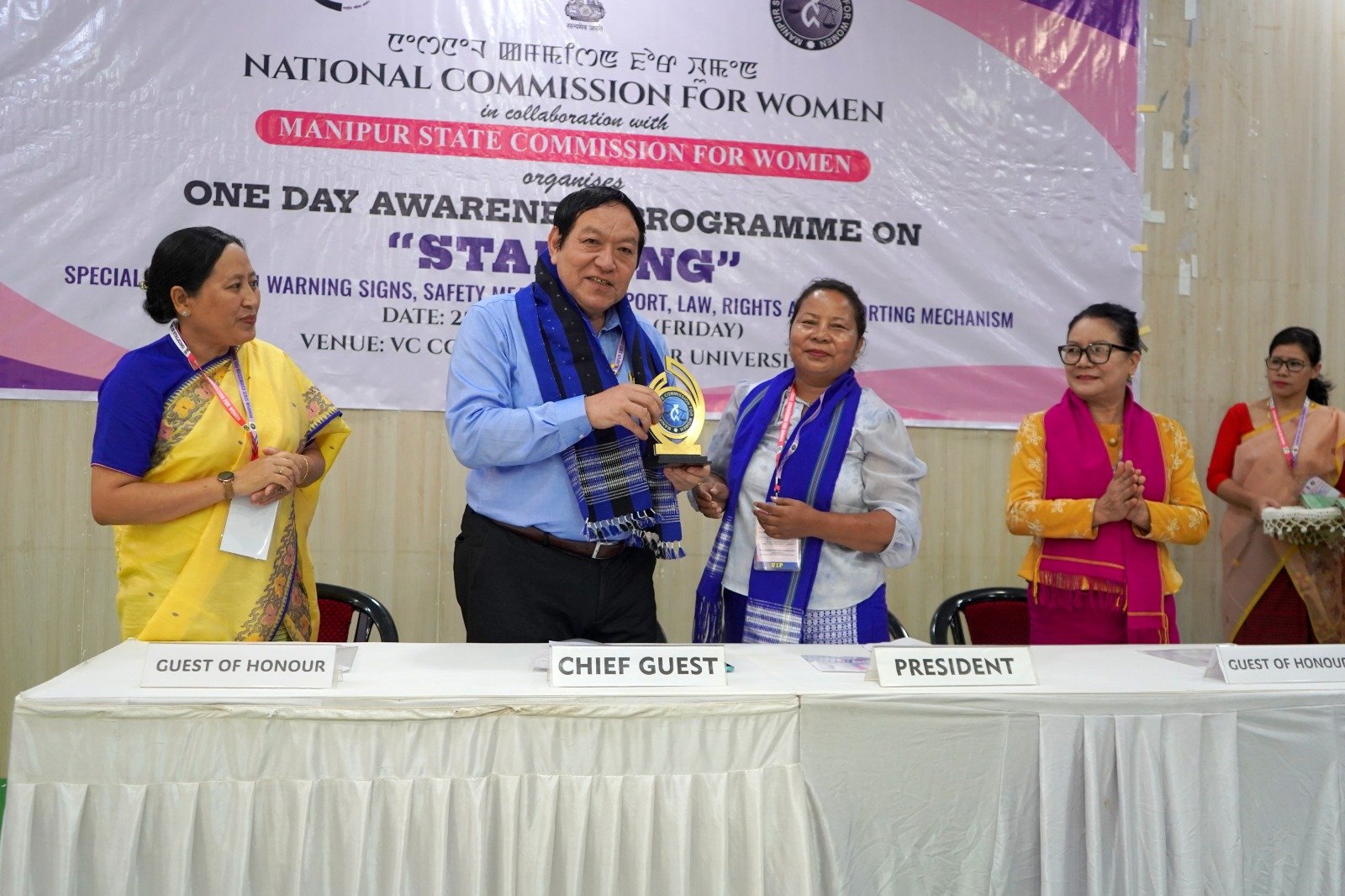
Imphal, August 28, 2026: A One-Day Awareness Programme on “Stalking”, with special sessions on warning signs, safety measures, support, law, rights and reporting mechanisms, was organised at the VC Court Hall, Manipur University, on Friday by the National Commission for Women (NCW) in collaboration with the Manipur State Commission for Women (MSCW).
The programme brought together experts from law enforcement, cybercrime, law, psychology and women’s rights to sensitise university students to the different forms of stalking, their psychological and social implications, cyberstalking, preventive measures and the legal and institutional mechanisms available for reporting and redressal.
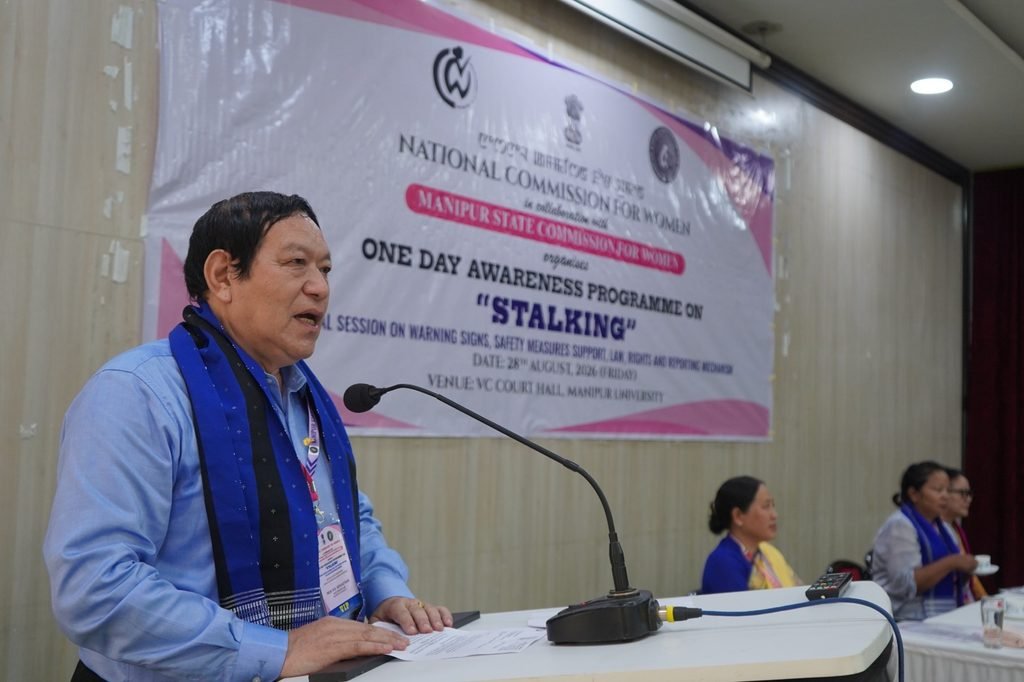
Addressing the gathering, Prof. R.K. Hemakumar Singh, Vice-Chancellor (In-charge), Manipur University, expressed appreciation to the National Commission for Women and the Manipur State Commission for Women for bringing the outreach programme to the University.
He said Manipur University has consistently endeavoured to provide students with a safe and secure campus environment and observed that awareness initiatives of this nature would further contribute towards making the campus safer and more supportive. He stressed the importance of awareness, responsible behaviour and knowledge of the mechanisms available to students when confronted with harassment or stalking.
In her address, Th. Tiningpham Monsang, Chairperson, Manipur State Commission for Women, said the programme was taken up in view of the need for greater awareness about stalking and its consequences. Lack of awareness, she observed, could result in victims failing to recognise stalking or understand the seriousness of the behaviour they were experiencing.
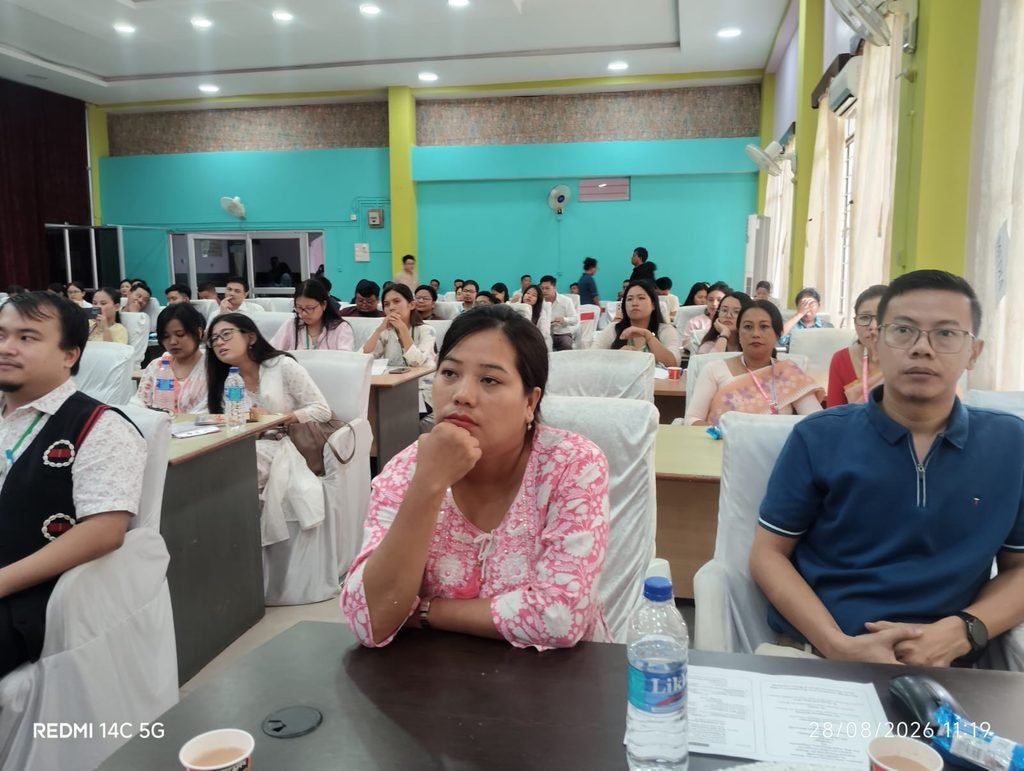
She said stalking could create fear and insecurity and restrict a victim’s freedom of movement and participation in everyday life. The Commission, therefore, seeks through such programmes to enable girls and women in particular to recognise warning signs, take appropriate precautions and prevent situations from escalating into more serious problems.
Delivering the welcome and keynote address, W. Phajatombi Devi (MCS), Member Secretary, Manipur State Commission for Women and Additional Director (IPR), Manipur, said the programme was primarily aimed at creating awareness among students, particularly young women, while noting that men could also become victims of stalking.
She said that although stalking might not always be recognised as a common phenomenon in society, its occurrence could cause considerable fear, distress and discomfort to victims. She underlined the need to examine stalking from different perspectives—including the legal, security, cyber and psychological dimensions—so that young people could understand how to recognise such behaviour, protect themselves and seek appropriate remedies.
During the first technical session, John Ningombam, Superintendent of Police, Cyber Crime, spoke on “Understanding the Different Forms of Cyber Stalking and Redressal Mechanism.”
He observed that cyberstalking had become an important concern in an increasingly connected online environment and that one of the challenges was that victims might not immediately recognise that they were being subjected to it. Repeated and persistent unwanted online contact, including continued messaging despite an individual making it clear that such communication was unwanted, could constitute cyberstalking, he explained.
SP John also stressed the importance of preserving digital evidence before lodging a complaint. Messages, screenshots and other relevant digital records should be properly preserved as they could become important evidence while reporting an incident to Cyber Crime authorities, he said.
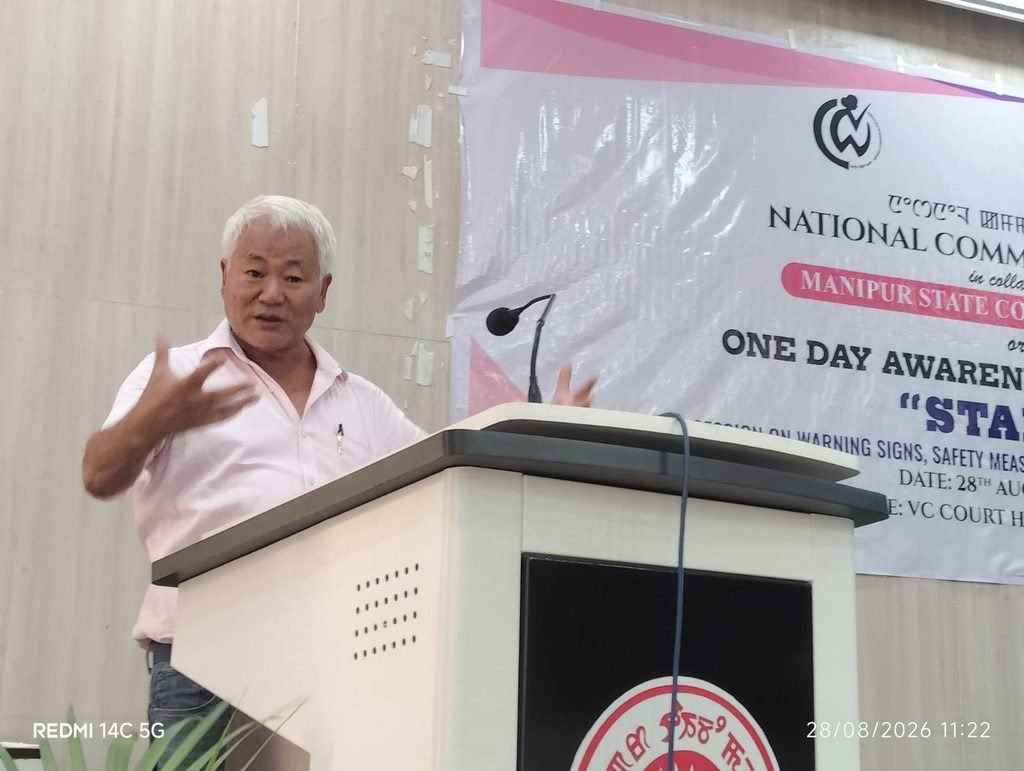
Prof. M.C. Arunkumar, Dean, School of Human and Environmental Sciences, Manipur University, speaking on the “Psychological Impact of Stalking”, discussed psychological factors associated with stalking and the importance of understanding behaviour and interpersonal signals correctly.
He explained that ambivalent attachment and cognitive distortions could sometimes become driving factors behind stalking, with individuals misinterpreting friendliness, ordinary social interaction or other signals as indications of romantic interest. He also discussed different behavioural patterns associated with stalking, including rejected stalkers, incompetent suitors and resentful stalkers.
Prof. Arunkumar stressed that persistent attention following rejection should not be mistaken for affection. Emotional maturity, clear communication and the ability to accept rejection gracefully were important in preventing interpersonal misunderstandings from escalating into stalking behaviour, he said. He also emphasised the need to distinguish ordinary coincidental encounters from persistent unwanted behaviour while remaining alert when a clear pattern emerged.
In the second technical session, Khoisnam Sarma, IPS, Commanding Officer, 1st Battalion Manipur Rifles, spoke on “Reporting and Complaint Mechanism”, explaining the avenues available to victims of both physical and online stalking.
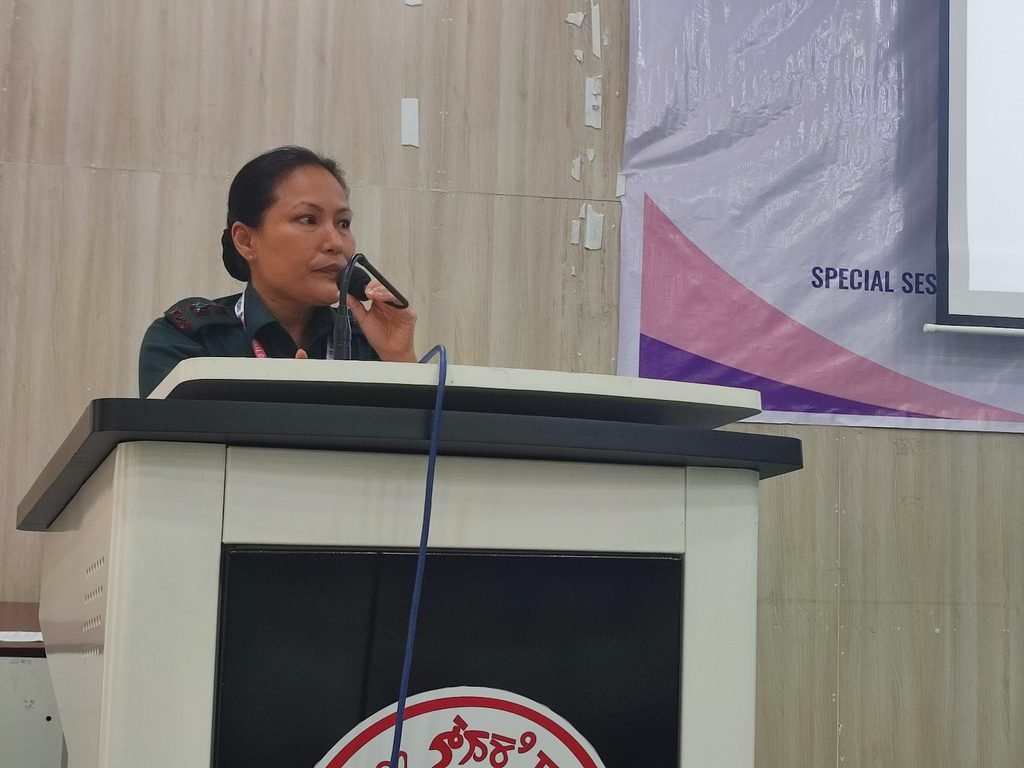
She informed participants that complaints could be lodged at the relevant police station and explained the provision of Zero FIR, under which a victim could approach a police station irrespective of territorial jurisdiction, with the case subsequently transferred to the appropriate police station. She also referred to complaint and assistance mechanisms available through the National Commission for Women and stressed that victims should know where and how to seek help rather than remain silent because of uncertainty over reporting procedures.
Rajkishore Thiyam, Advocate, addressed the participants on “Stalking Women’s Safety: Law, Rights and Prevention”, focusing on the legal, rights-based and preventive dimensions of stalking and women’s safety.
The technical sessions were followed by interaction sessions, providing students an opportunity to engage with the resource persons and seek clarification on stalking, cyber safety, prevention and reporting mechanisms.
The programme was coordinated from the Manipur University side by Dr. Takhellambam Deepamanjuri Devi, Assistant Professor, Department of Sociology, and Dr. Huidrom Suraj Singh, Assistant Professor, Department of Anthropology, Manipur University. The programme concluded with a vote of thanks proposed by Dr. Takhellambam Deepamanjuri Devi.