The university scored 67.5 per cent in its 2025–26 transparency audit. At the launch, officials called for clearer online information, including on how students can get their marks checked.
Imphal, November 18, 2026 — Manipur University released RTI handbook on Wednesday for officials who handle Right to Information applications and first appeals. The launch at Canchipur followed a third-party transparency audit that gave the university a score of 67.5 per cent and recommended a regular schedule for updating the information it publishes online.
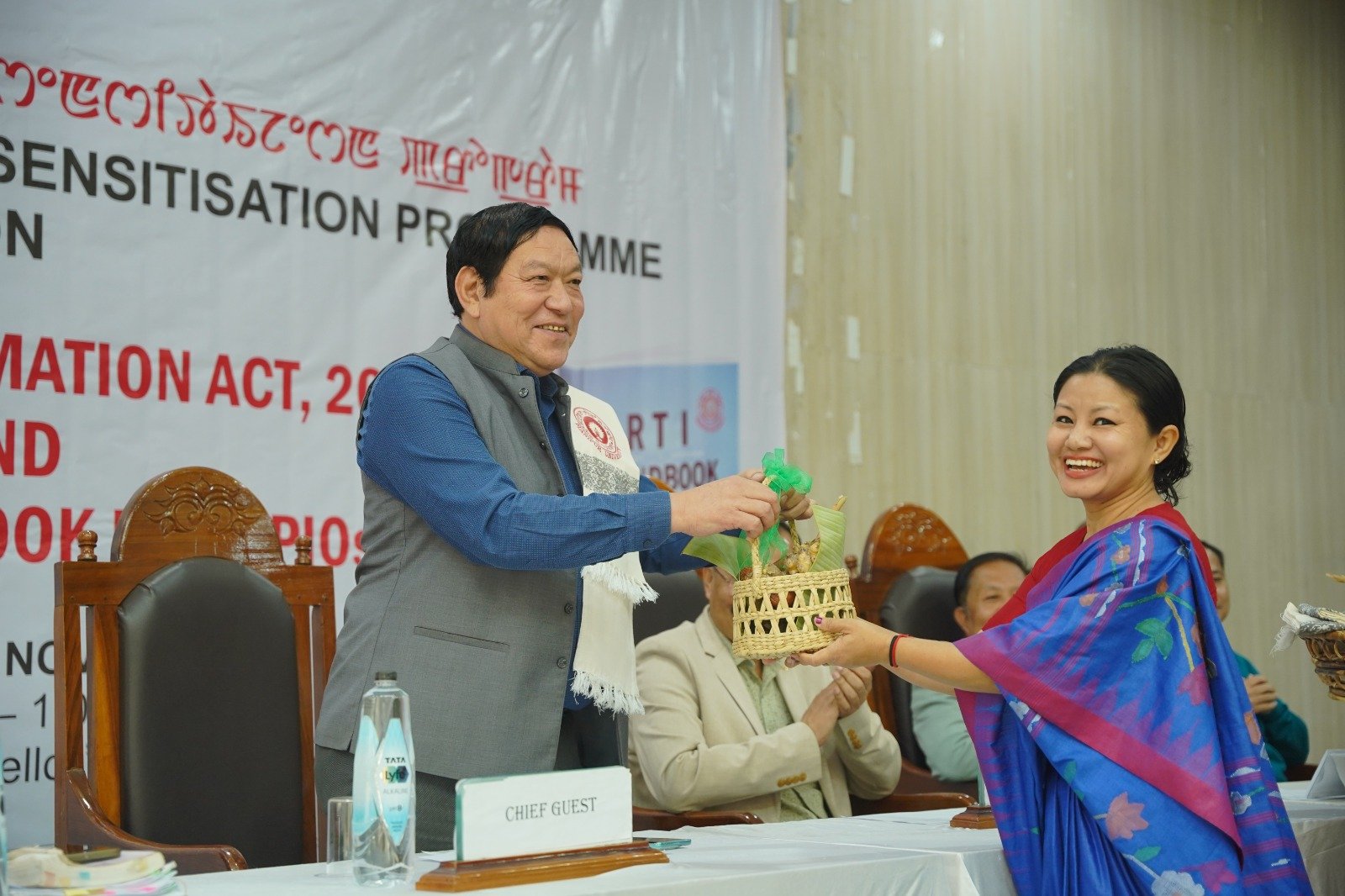
The Office of the Central Public Information Officer and Public Relations Officer organised the one-day programme at the Court Hall of the Vice-Chancellor’s Secretariat.
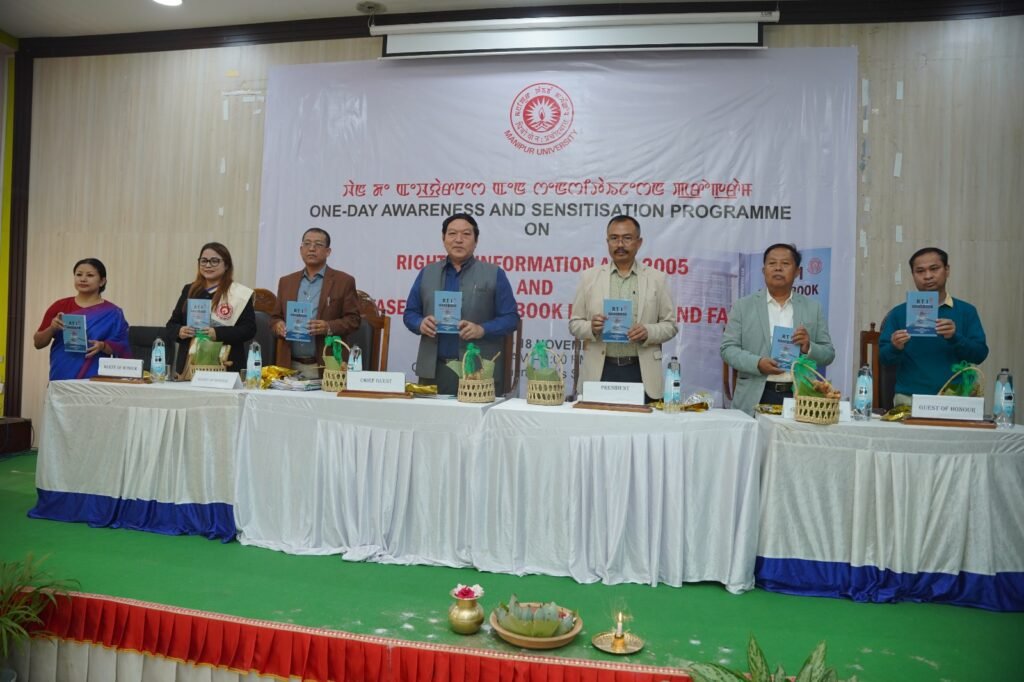
Vice-Chancellor Prof. R.K. Hemakumar Singh attended as Chief Guest, while Registrar and First Appellate Authority Prof. M. Premjit Singh presided over the programme. The Guests of Honour were Prof. Yumnam Premananda Singh, Head of the Department of Law; Prof. Khelena Gurumayum, Head of the Department of Political Science; Shri T. Shantikumar Singh, Controller of Examinations; and Prof. L. Rajendrakumar Singh, Finance Officer.
Vice-Chancellor Prof. R.K. Hemakumar Singh urged officials to welcome RTI applications and take shared responsibility for maintaining records and responding to requests across academic departments, administration, examinations and finance. He reminded officials that the university is supported by public funds and called on heads of departments and officers in administration, examinations and finance to share responsibility for maintaining records and responding to requests. He commended Dr. Sakila Nongmeikapam and her team for organising the programme and compiling the handbook, and sought continued guidance from the Department of Law on handling RTI matters.
Audit calls for a timetable for disclosures
The Indian Institute of Public Administration’s Puducherry regional branch found the university’s proactive disclosures satisfactory overall.
Dr. Sakila Nongmeikapam, the university’s Public Relations Officer and a Central Public Information Officer, described the score as an encouraging start. She said regular website updates would make it easier for students, parents and other citizens to find information. She also called for periodic training, better record-keeping and closer coordination between departments.
Clearer guidance for students seeking marks checks
Controller of Examinations T. Shantikumar Singh urged the university to explain its re-scrutiny procedure more clearly online. He said students should be able to find out that the process checks for answers left unmarked and errors in adding or transferring marks. The university already has a separate webpage on inspecting evaluated answer scripts under the RTI Act.
Registrar and First Appellate Authority Prof. M. Premjit Singh, who presided over the programme, said access to file notes and official records allows citizens to see how administrative decisions were made. He urged officials to understand the Act’s exemptions so they can assess requests involving confidential examination processes.
Prof. Yumnam Premananda Singh, head of the Department of Law, urged officers to help applicants who need assistance putting requests in writing. He said officers should explain the reasons for refusing a request and tell applicants how to appeal. He proposed a second volume of the handbook featuring selected Central Information Commission decisions and relevant judgments from the High Court of Manipur and the Supreme Court.
Prof. Khelena Gurumayum said reliable public information could help rebuild trust in institutions in Manipur. She highlighted relief, rehabilitation and resettlement as areas where citizens could use RTI to ask how much funding had been released and whether assistance had reached displaced families. She stressed that disclosure should protect the privacy and dignity of displaced people, and said access to information could help women affected by displacement understand their entitlements and question delays.
Prof. L. Rajendrakumar Singh outlined three principles for effective governance: transparency, trust and transformation. He said public scrutiny helps citizens understand how funds are used and encourages officers to keep reliable records and take responsibility for decisions in areas such as procurement, finance and examinations.