Five-day enrichment programme brings together leading mathematicians and around 40 school teachers from 35 schools; Vice-Chancellor calls for wider academic outreach and greater participation of women teachers.
Imphal, November 5, 2026: Mathematics education must move beyond memorising formulas and reproducing solutions to helping students develop independent reasoning, conceptual understanding and the confidence to solve unfamiliar problems. This emerged as a central message during an interaction programme and felicitation of resource persons held at the Department of Mathematics, Manipur University, Canchipur, on Thursday.
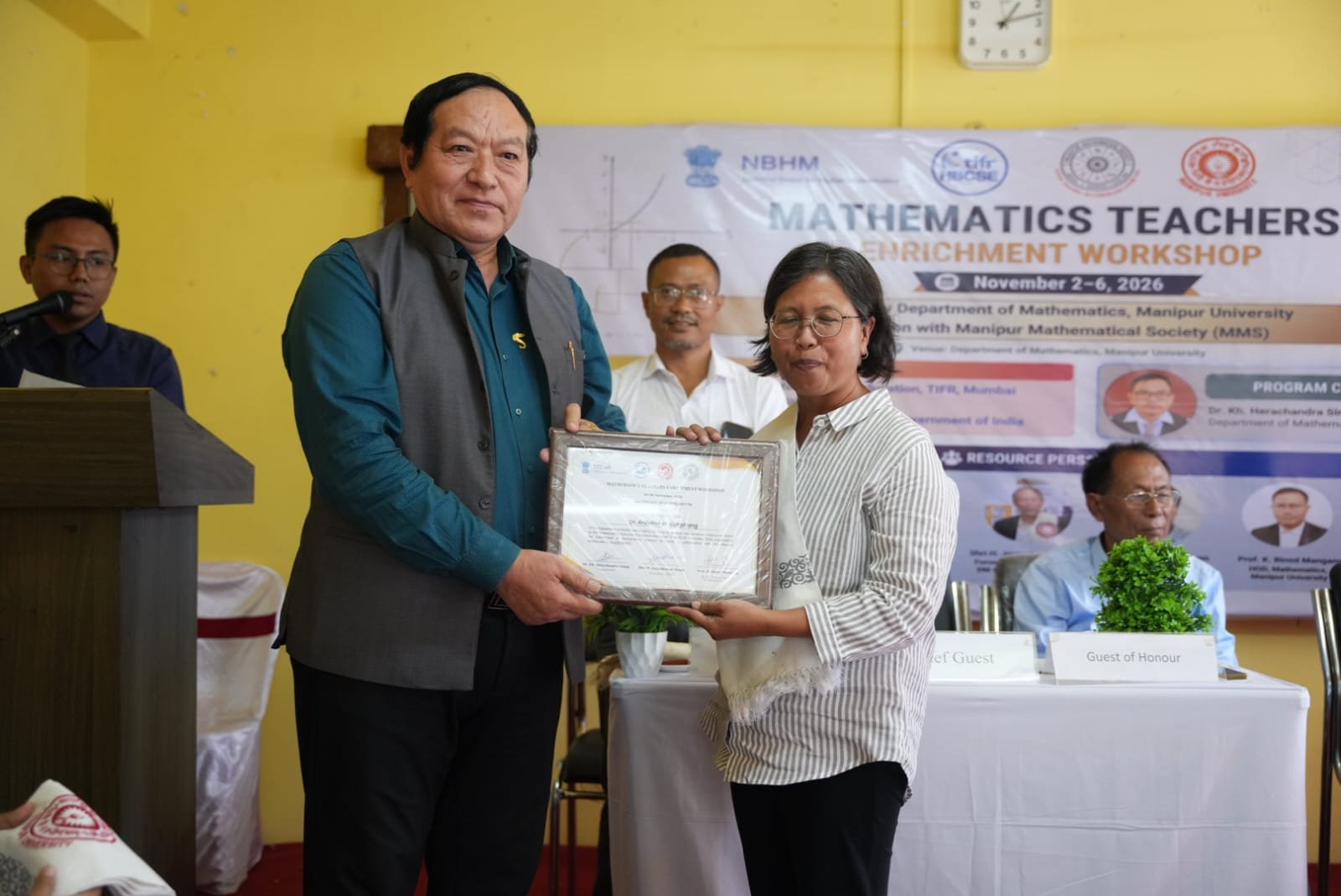
The programme formed part of the five-day Mathematics Teachers Enrichment Workshop 2026, being organised from November 2 to 6 by the Department of Mathematics in collaboration with the Manipur Mathematical Society (MMS), with financial support from the National Board for Higher Mathematics (NBHM) and the Homi Bhabha Centre for Science Education (HBCSE), Tata Institute of Fundamental Research.
Bringing together distinguished mathematicians from leading institutions, university officials, faculty members and school teachers, the workshop seeks to address an important challenge in mathematics education: how to make the subject more accessible, intellectually engaging and less intimidating for schoolchildren.
The discussions also placed mathematics within a wider national context, particularly its growing importance in Artificial Intelligence, scientific innovation and technological development.
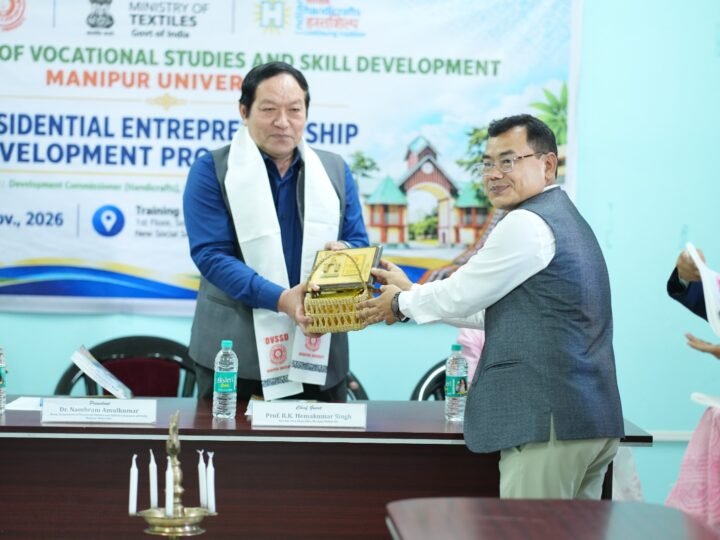
The interaction programme was attended by Prof. R.K. Hemakumar Singh, Vice-Chancellor (i/c), Manipur University, as Chief Guest. Prof. R.K. Lonibala, Dean, School of Mathematical and Physical Sciences; Prof. Bhaba Kumar Sarma of IIT Guwahati; Shri H. Jayantkumar Singh, President of the Manipur Mathematical Society; and Prof. M. Premjit Singh, Registrar, Manipur University, attended as Guests of Honour. Prof. K. Binod Mangang, Head of the Department of Mathematics, presided over the function.
The programme began with the presentation of Lengyan Phee, followed by a welcome address delivered by Prof. O. Ratnabala Devi. The resource persons were felicitated in recognition of their academic contributions and efforts to strengthen mathematical learning and talent development.
The workshop’s resource persons include Prof. Bhaba Kumar Sarma of IIT Guwahati; Prof. Shanta Laishram of the Indian Statistical Institute, Delhi; Dr. Ardeline M. Buhphang of North-Eastern Hill University, Shillong; Dr. Chandrakant Aribam of IISER Mohali; Shri H. Jayantkumar Singh of the Manipur Mathematical Society; and Prof. Pratulananda Das of Jadavpur University, Kolkata.
Vice-Chancellor Calls for Wider Academic Outreach
Addressing the gathering, Vice-Chancellor Prof. R.K. Hemakumar Singh appreciated the initiative taken by the Department of Mathematics and described the enrichment workshop as an important academic outreach programme.
He observed that universities have a responsibility extending beyond their own students and research activities. By sharing academic expertise with school and college teachers, university departments can contribute directly to improving the quality of education at the foundational level.
Referring to the five major objectives of the workshop, Prof. Hemakumar highlighted its focus on improving mathematical literacy, introducing innovative teaching methodologies, strengthening problem-solving abilities, developing mathematical foundations and addressing important concepts that often receive inadequate attention in conventional classroom instruction.
He emphasised that mathematics occupies a fundamental position in science and several other academic disciplines. Improvements in mathematics education, therefore, could contribute to the advancement of knowledge across different fields.
The Vice-Chancellor appreciated the longstanding association between the Department of Mathematics and the Manipur Mathematical Society. He described the collaboration as an encouraging example of how an academic department and an organisation of experienced mathematicians could work together for the benefit of younger generations.
He encouraged other departments of Manipur University to undertake similar initiatives, particularly programmes that connect university expertise with educational institutions outside the campus.
Expressing hope that the Mathematics Teachers Enrichment Workshop would become a continuing academic activity, Prof. Hemakumar suggested expanding its reach in future years to include more teachers from schools and colleges across the State.
He also drew attention to the comparatively low representation of women among the participating teachers and stressed the importance of encouraging greater female participation in subsequent programmes.
The Vice-Chancellor suggested collecting feedback from participants to evaluate the effectiveness of the workshop and identify areas requiring improvement. Such feedback, he observed, would help organisers develop more useful and responsive training programmes.
Training Teachers to Overcome Students’ Fear of Mathematics
Delivering the keynote address, Programme Coordinator Dr. Kh. Herachandra Singh, Associate Professor in the Department of Mathematics, explained the thinking behind the workshop and the need for a broader approach to mathematical talent development in Manipur.
He observed that many students develop a fear of mathematics during their school years. This fear can discourage them from exploring the subject, even when they possess the ability to understand mathematical ideas.
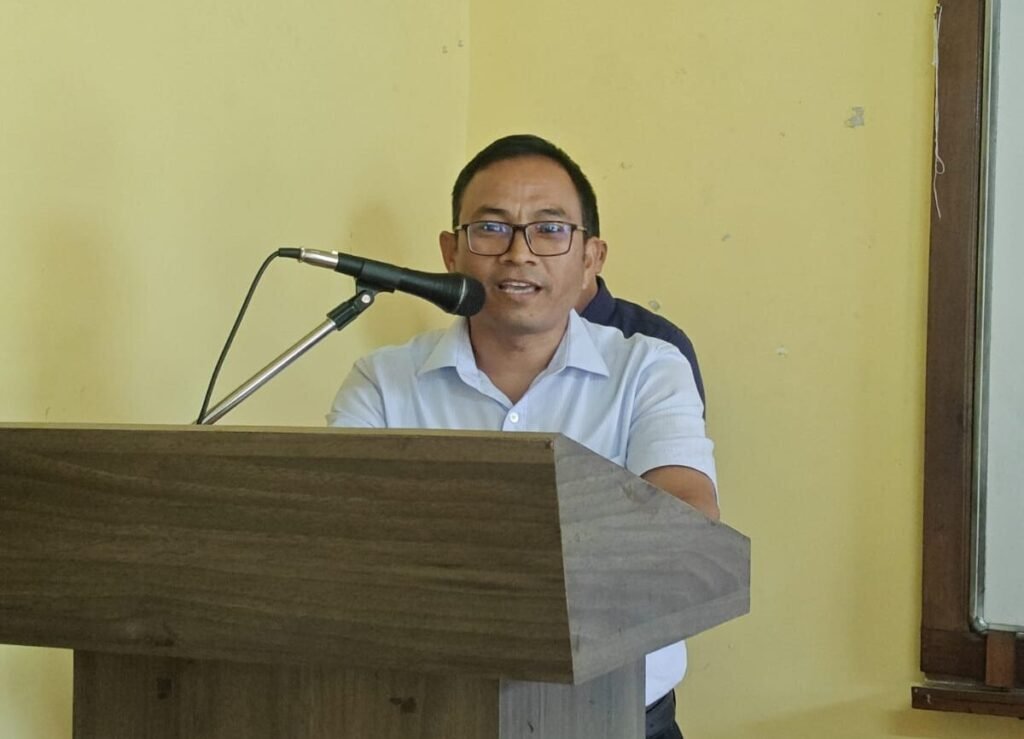
The challenge, therefore, is not simply to teach students how to arrive at correct answers but to help teachers create a classroom environment in which students feel comfortable asking questions, making attempts and learning from mistakes.
Dr. Herachandra explained that the workshop represented a shift in the approach to mathematical enrichment activities.
While several earlier initiatives had concentrated on providing specialised training to selected students, the present programme was designed to strengthen the capabilities of school teachers who could subsequently guide a much larger number of students in their respective institutions.
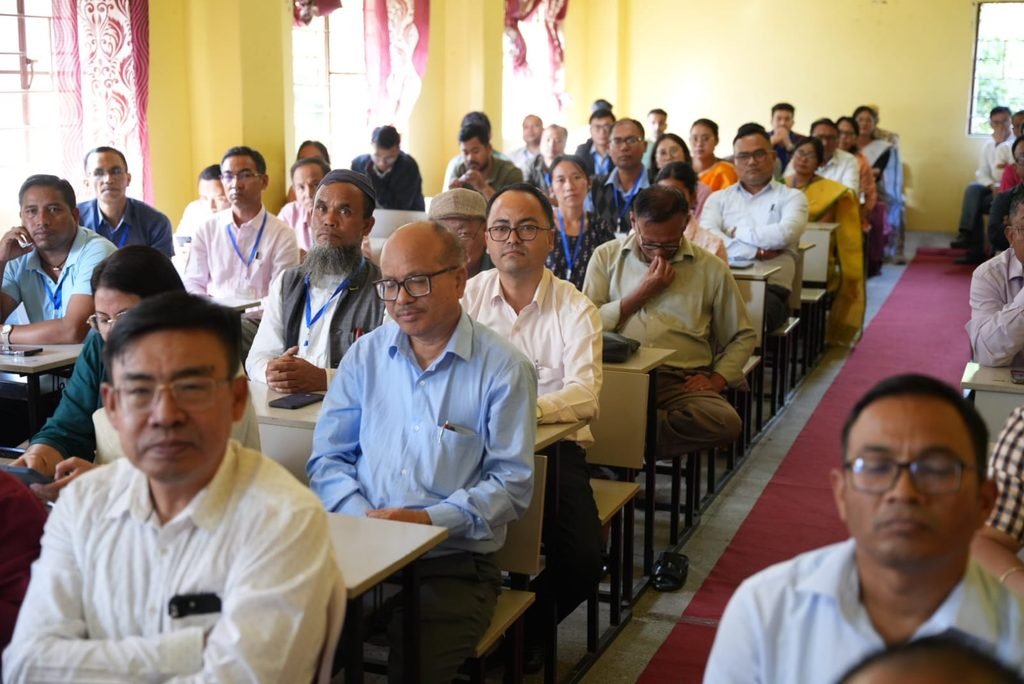
Around 40 teachers representing approximately 35 schools across Manipur have been accommodated in the five-day programme.
Dr. Herachandra informed the gathering that the original plan had included teachers from outside Manipur. However, some prospective participants were unable to attend because of the prevailing situation in the State.
He said the Department had been considering the possibility of organising specialised training programmes for school mathematics teachers since 2022. The present workshop marked an important step towards translating that idea into an organised academic initiative.
The programme seeks to develop a wider network of teachers capable of identifying mathematical aptitude, encouraging curiosity and guiding students towards higher levels of mathematical learning.
H. Jayantkumar Singh Calls for Strengthening Teacher Training
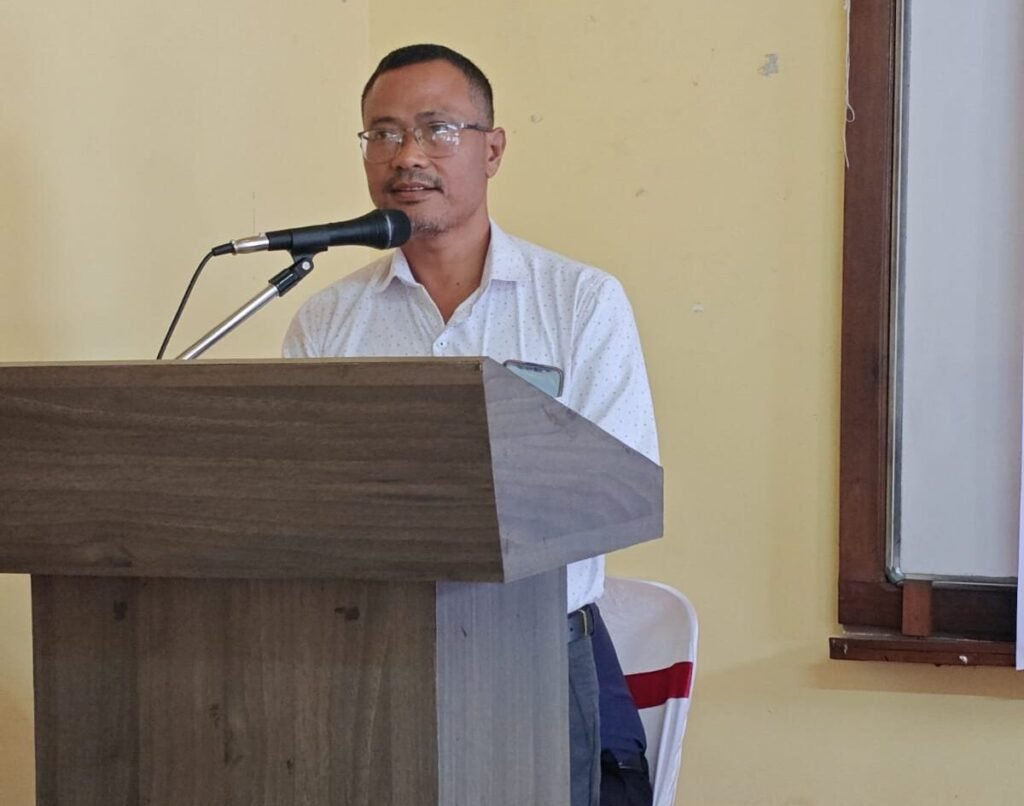
Shri H. Jayantkumar Singh, President of the Manipur Mathematical Society, emphasised the need to overcome mathematics phobia among schoolchildren through improved teaching methods and stronger conceptual understanding.
Drawing on more than five decades of teaching experience, he observed that many students fear mathematics because they fail to understand the definitions, relationships and underlying principles of mathematical concepts. Referring to topics such as set theory, relations and functions, he said teachers should encourage students to explore why mathematical methods work rather than merely memorise solutions.
Highlighting the National Education Policy 2020, he stressed that educational reforms could succeed only when teachers were adequately trained to implement new curricula and teaching methodologies. While experts formulate educational policies, he observed, classroom teachers carry the responsibility of translating them into meaningful learning experiences.
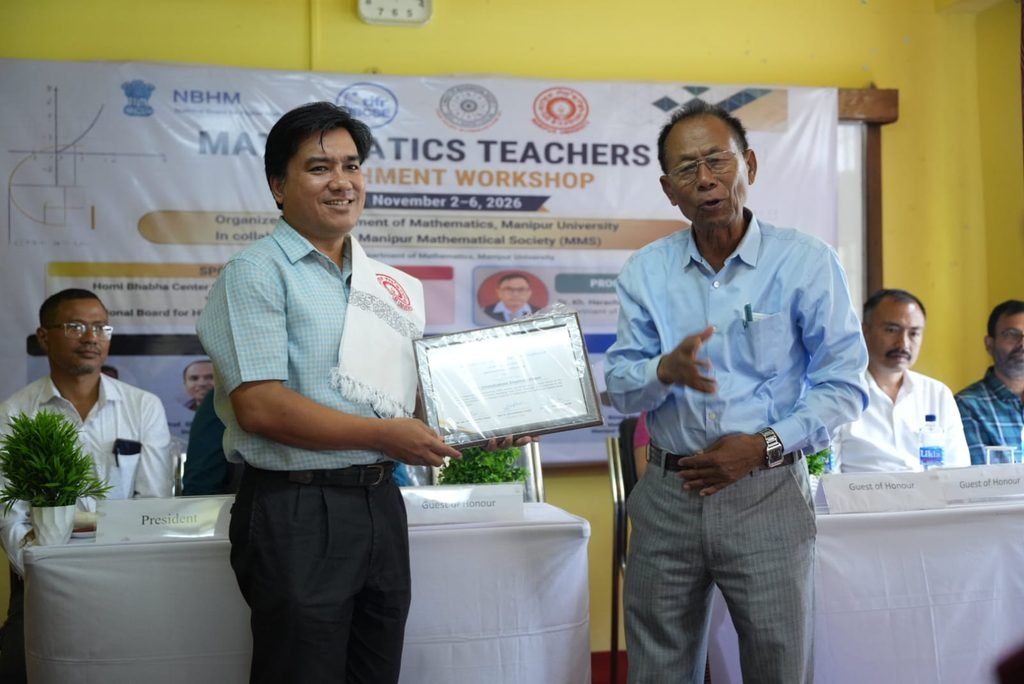
Recalling his pioneering efforts to popularise Mathematical Olympiads in Manipur, Jayantkumar Singh said he had visited several schools, including Johnstone School, Tamsana School and C.C. Higher Secondary School, to encourage students to participate in mathematical enrichment activities at a time when awareness of Olympiads was limited.
He also highlighted the importance of developing accurate scientific terminology in Meiteilon, explaining that effective teaching requires a clear understanding of concepts rather than literal translations or memorised definitions.
Expressing concern over the limited institutional support for mathematics enrichment programmes, he urged education administrators and policymakers to recognise the importance of sustained teacher training and mathematical talent development.
Appreciating the encouraging participation of teachers in the workshop, he expressed hope that such initiatives would help make mathematics a subject of curiosity, confidence and intellectual exploration rather than fear.
Manipur’s Mathematics Olympiad Tradition Recalled
Dr. Herachandra also reflected on Manipur’s association with the Mathematical Olympiad movement, which dates back to the early 1990s.
He acknowledged the contributions of senior mathematicians, particularly the late Prof. M. Ranjit Singh, whose efforts helped establish and sustain interest in advanced mathematical learning and competitive problem-solving in the State.
The contribution of experienced teachers and mathematicians, he observed, had enabled generations of students to pursue mathematics beyond routine school examinations.
He explained the official Mathematical Olympiad pathway and urged participating teachers to become familiar with recognised competitions so that they could provide appropriate guidance to talented students.
He also cautioned teachers against confusing officially recognised Mathematical Olympiad programmes with privately organised examinations that use the Olympiad name.
The distinction was important because students and parents should understand the different purposes, structures and levels of recognition associated with such competitions.
By familiarising teachers with recognised mathematical enrichment opportunities, the workshop hopes to improve students’ access to advanced training and competitive mathematics.
The broader objective is to ensure that mathematical talent is not overlooked simply because students lack information, encouragement or access to specialised guidance.
Mathematics Teaching Should Develop Independent Thinkers
Speaking as Guest of Honour, Prof. Bhaba Kumar Sarma of IIT Guwahati offered a detailed reflection on the nature of mathematics teaching and the need to encourage independent thinking among students.
Drawing on his experience with the Mathematics Training and Talent Search (MTTS) programme, he emphasised that effective teaching should not be limited to demonstrating solutions to mathematical problems.
Instead, teachers should encourage students to examine definitions, ask why a particular method works and gradually discover mathematical relationships through their own reasoning.
He pointed out that a student might learn to reproduce a solution without necessarily understanding the mathematical idea behind it.
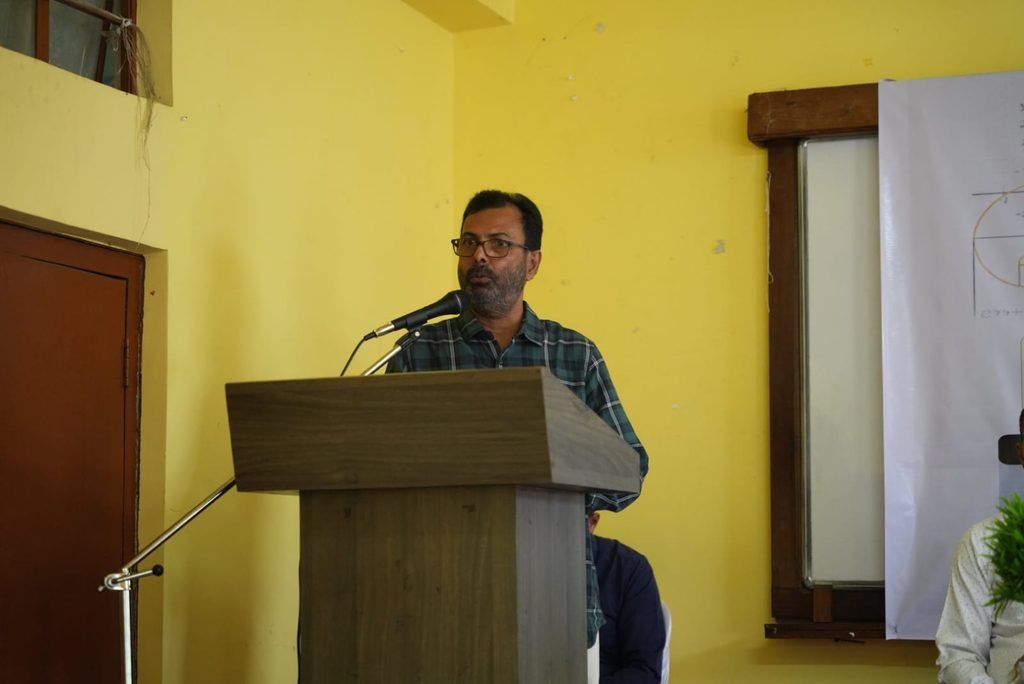
Such learning could help students answer familiar examination questions but might leave them unprepared when confronted with unfamiliar problems requiring independent thought.
Prof. Sarma referred to the educational philosophy of French mathematician Henri Lebesgue to underline the importance of demonstrating the process of mathematical thinking rather than merely presenting finished results.
The classroom, in this approach, becomes a place where students observe how mathematical ideas are developed, tested and understood.
He also spoke about the importance of carefully introducing definitions and encouraging students to explore their implications.
Understanding a definition is different from merely memorising its wording. A student who understands the underlying idea is better equipped to apply it in new situations.
Prof. Sarma expressed happiness at returning to Manipur University and paid tribute to the late Prof. M. Ranjit Singh, recalling his dedication to mathematics education and lasting contributions to the Department.
He acknowledged the continuing efforts of Shri H. Jayantkumar Singh in nurturing mathematical talent in Manipur.
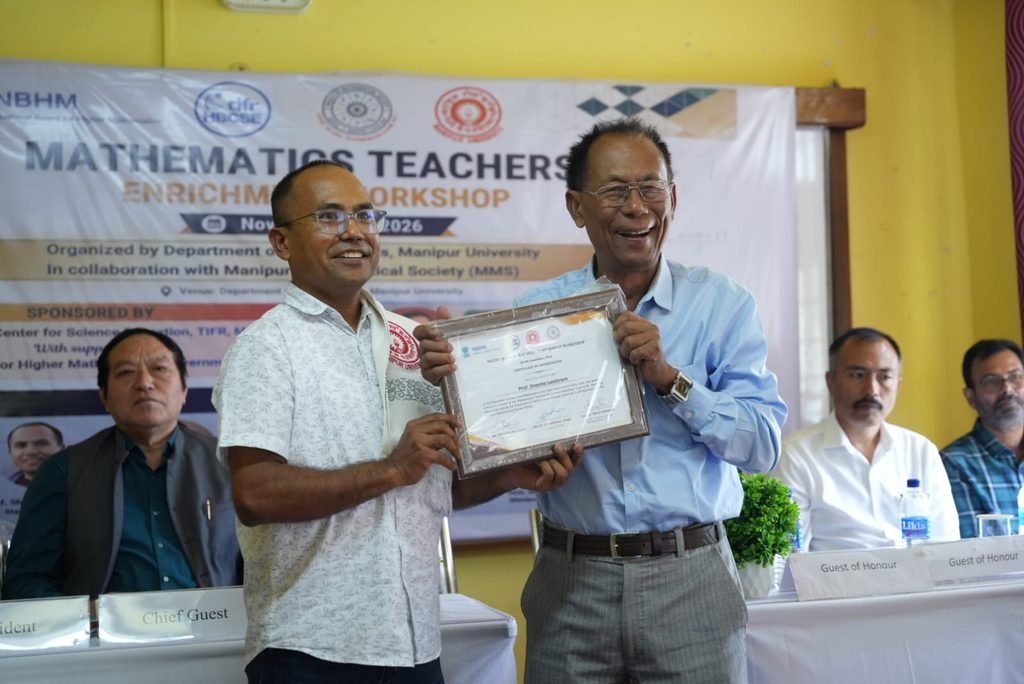
Referring to mathematicians such as Prof. Shanta Laishram and Dr. Chandrakant Aribam, he highlighted the potential of students from Manipur to pursue advanced mathematics and establish themselves in prominent academic institutions.
Their achievements, he indicated, could serve as encouragement to younger students aspiring to careers in mathematics and scientific research.
Artificial Intelligence Makes Mathematical Reasoning More Important
A significant part of Prof. Bhaba Kumar Sarma’s address focused on the changing educational environment created by Artificial Intelligence.
He observed that rapid technological advances have made information and ready-made answers increasingly accessible. Students can now obtain solutions and explanations through digital tools with considerably less effort than in the past.
However, he stressed that easier access to answers should not be mistaken for deeper understanding.
The challenge for mathematics teachers is to ensure that students develop the reasoning abilities required to examine information, evaluate methods and understand why a solution is mathematically valid.
In an era when Artificial Intelligence can perform many routine calculations and generate answers, independent reasoning and conceptual clarity become especially valuable.
Prof. Sarma identified optimisation, linear algebra and statistics as important mathematical foundations underlying Artificial Intelligence.
A deeper understanding of these areas, he observed, would be necessary for students who wish to contribute to emerging technologies rather than remain dependent on their applications.
His observations connected school mathematics education with India’s larger technological ambitions.
The ability to develop advanced technologies, including Artificial Intelligence, depends not only on access to sophisticated computing systems but also on the mathematical knowledge and analytical skills of the people who design, develop and use them.
The discussion consequently highlighted the importance of building strong mathematical foundations well before students enter universities or specialised technical institutions.
Mathematics Extends from Household Finances to Scientific Research
Prof. R.K. Lonibala, Dean of the School of Mathematical and Physical Sciences, emphasised the extensive role of mathematics in modern society.
She observed that mathematics is not confined to academic laboratories or theoretical calculations. Its applications extend to everyday activities, including personal financial decisions, as well as complex areas of scientific and technological development.
Referring to its relevance in economics, physical and natural sciences, medicine, healthcare, engineering, infrastructure, technology and cryptography, she highlighted how mathematical principles support numerous aspects of contemporary life.
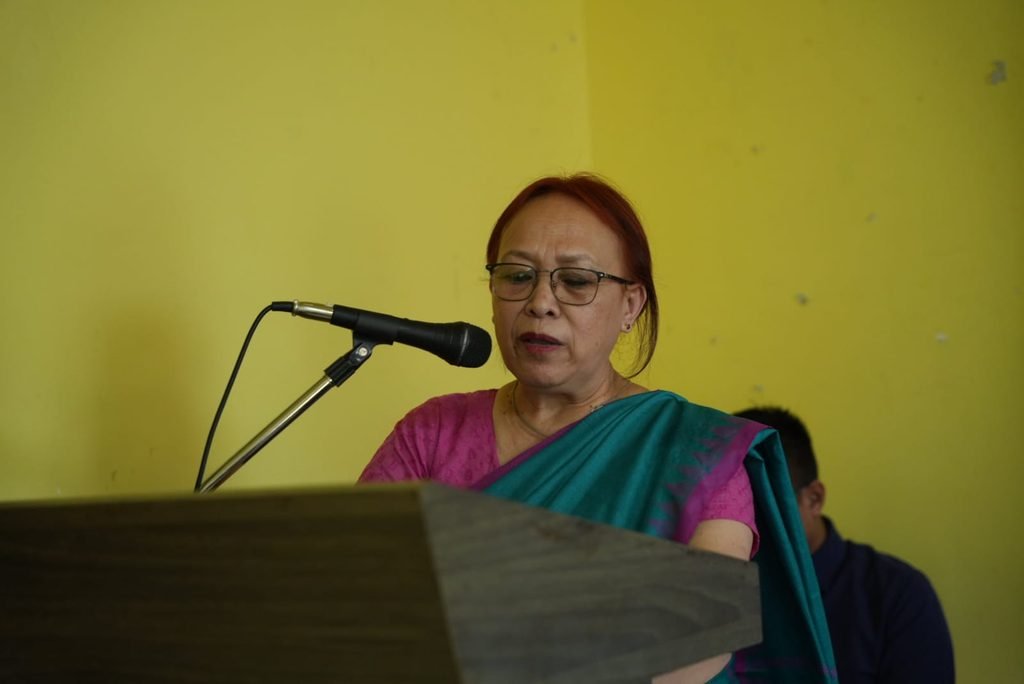
She stressed that improving mathematics education could therefore have implications beyond the performance of students in school examinations.
A stronger mathematical foundation can equip learners to pursue opportunities across academic disciplines and professional fields where quantitative reasoning and analytical abilities are increasingly important.
Prof. Lonibala congratulated the Department of Mathematics and particularly Programme Coordinator Dr. Kh. Herachandra Singh for undertaking an initiative aimed at improving mathematical pedagogy in the region.
She expressed confidence that the participating teachers would benefit from their interactions with experienced resource persons and carry useful insights back to their respective schools.
She also hoped that the workshop would contribute to the wider improvement of mathematics education across Northeast India.
Effective Teaching Requires Conceptual Clarity and Classroom Discipline
Registrar Prof. M. Premjit Singh reflected on the qualities that make mathematics teachers effective and memorable.
Recalling the teaching contributions of Shri H. Jayantkumar Singh and another respected mathematics educator, he highlighted the value of different approaches to classroom instruction.
He observed that good mathematics teaching requires clarity in explaining concepts as well as the discipline necessary to complete the prescribed curriculum.
While a teacher’s ability to explain difficult ideas in an understandable manner is essential, students must also receive systematic instruction that enables them to progress through the required course.
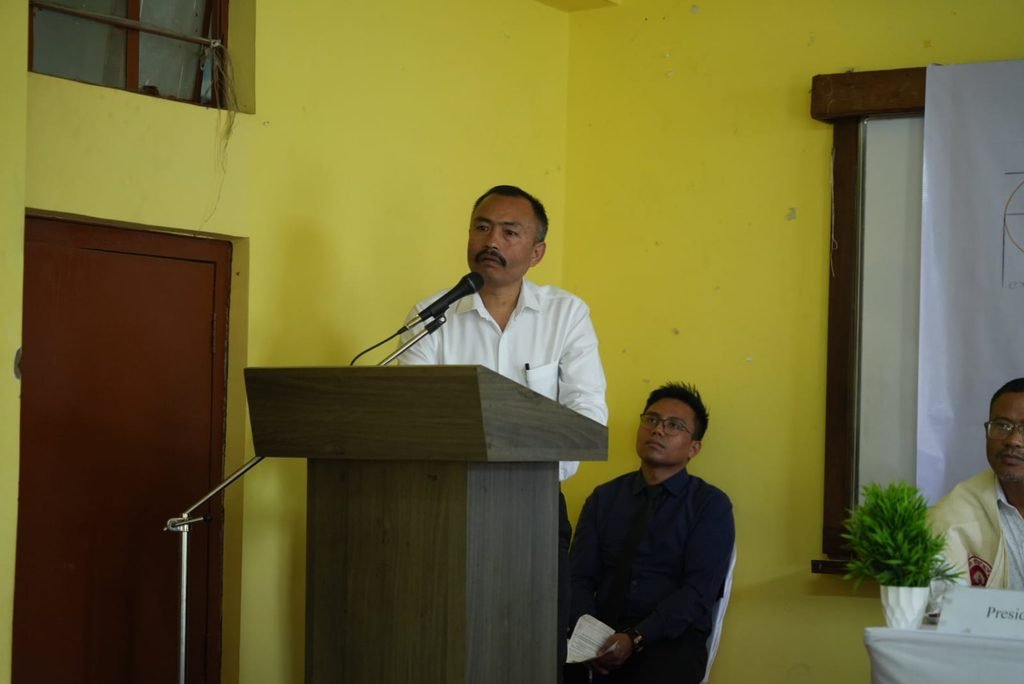
A teacher capable of combining conceptual explanation with disciplined academic planning, he indicated, could make a lasting contribution to students’ development.
His observations added a practical classroom dimension to the wider discussions on teaching methodology.
They also underlined the importance of balancing innovative learning approaches with the everyday responsibilities of school teachers.
Teachers Hold the Key to India’s Scientific Ambitions
Presiding over the programme, Prof. K. Binod Mangang, Head of the Department of Mathematics, placed mathematics education within the context of scientific advancement and India’s ambition to become a developed nation by 2047.
He observed that strong mathematical foundations are essential for progress in basic sciences and emerging technologies, particularly Artificial Intelligence.
As technological development becomes increasingly competitive, he stressed the importance of strengthening scientific education and preparing younger generations to contribute meaningfully to research and innovation.
Referring to the academic and technological achievements of countries such as China, Japan, South Korea, European nations and the United States, Prof. Mangang highlighted the connection between educational foundations, scientific capabilities and national development.
He described school and college teachers as frontline educators whose influence on young learners could determine the success of efforts to develop scientific and mathematical talent.
A teacher’s responsibility, he observed, extends beyond explaining difficult questions or completing prescribed lessons.
Teachers must also cultivate interest, build confidence and help students discover the satisfaction of solving problems independently.
Prof. Mangang explained that the objective of the five-day workshop was not to expect participants to master every difficult Mathematical Olympiad problem within the limited training period.
Rather, the programme was intended to motivate teachers, introduce them to useful approaches and encourage them to create learning environments in which students are willing to explore challenging ideas.
He cautioned against using complicated mathematical problems merely to demonstrate a teacher’s own expertise.
The purpose of presenting challenging problems, he emphasised, should be to stimulate curiosity and encourage students to develop their abilities progressively.
Prof. Mangang appreciated the efforts of Dr. Kh. Herachandra Singh in coordinating the workshop and acknowledged the contributions of senior mathematics educators who helped establish a tradition of mathematical training in Manipur.
Building a Wider Network of Mathematics Educators
An important feature of the Mathematics Teachers Enrichment Workshop is its emphasis on teachers as the link between advanced mathematical knowledge and school-level learning.
By bringing educators from approximately 35 schools into direct interaction with mathematicians from institutions such as IIT Guwahati, the Indian Statistical Institute, IISER Mohali, NEHU and Jadavpur University, the programme creates opportunities for exchanging ideas that may not ordinarily be available within school environments.
The participants are being introduced to approaches intended to strengthen mathematical literacy, improve conceptual understanding, promote problem-solving and encourage more active student participation in learning.
The workshop also seeks to address mathematical concepts that may receive insufficient attention in conventional classroom instruction.
Its longer-term educational value will depend on how effectively the participating teachers apply the training in their schools and whether the initiative develops into a sustained programme of academic outreach.
For Manipur, where mathematical enrichment activities have a history extending over several decades, the present workshop represents an attempt to widen access to specialised mathematical guidance through the school education system.
Instead of concentrating training opportunities on a limited number of talented students, the initiative seeks to equip teachers who can identify and encourage talent across a larger student population.
This approach also provides an opportunity to introduce advanced mathematical thinking to students who may not otherwise encounter Mathematical Olympiad problems or specialised enrichment programmes.
Five-Day Workshop to Conclude on November 6
The interaction programme concluded with a vote of thanks proposed by Prof. K. Priyokumar Singh, who expressed appreciation to the dignitaries, resource persons, organisers and participating teachers for their contributions. A group photograph followed the formal proceedings.
The Mathematics Teachers Enrichment Workshop 2026 will conclude on Friday, November 6.
The organisers expect the participating teachers to carry the knowledge and teaching approaches gained during the workshop back to their institutions, encouraging greater mathematical curiosity, improved foundational learning and wider participation in recognised Mathematical Olympiads and other advanced mathematical activities.
The central message from the programme was that improving mathematics education requires more than teaching students to arrive at correct answers. It requires teachers who can help students understand mathematical ideas, develop confidence in their reasoning and recognise the wider opportunities that mathematics can offer.