Manipur has sent its former Chief Minister, serving Chief Minister, Governor, legislators and civil-society representatives to Delhi. The Centre can no longer claim that it has not heard the demand for NRC before Census.
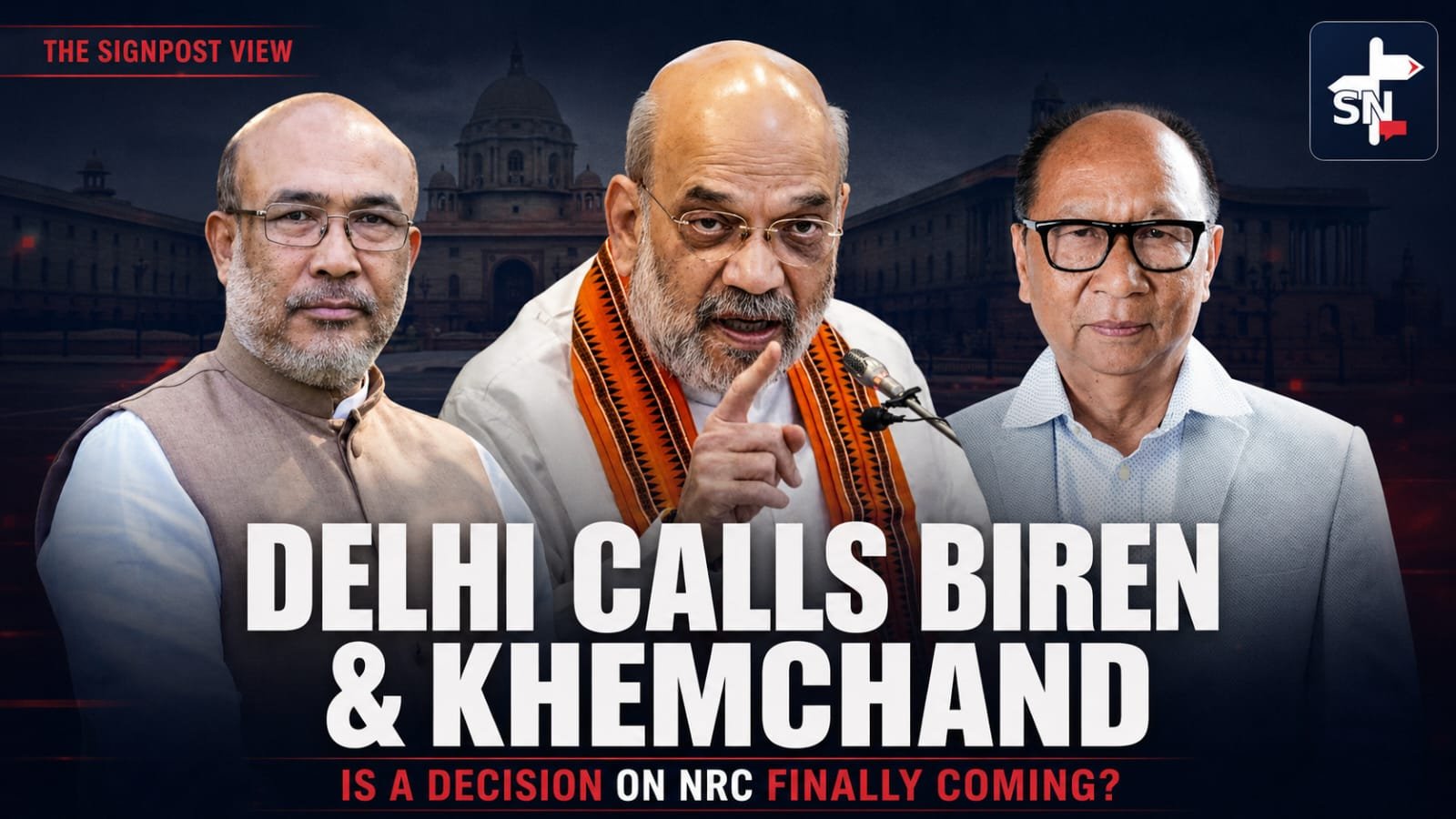
Former Manipur Chief Minister N. Biren Singh and serving Chief Minister Yumnam Khemchand Singh are both in New Delhi at a politically critical moment for the State.
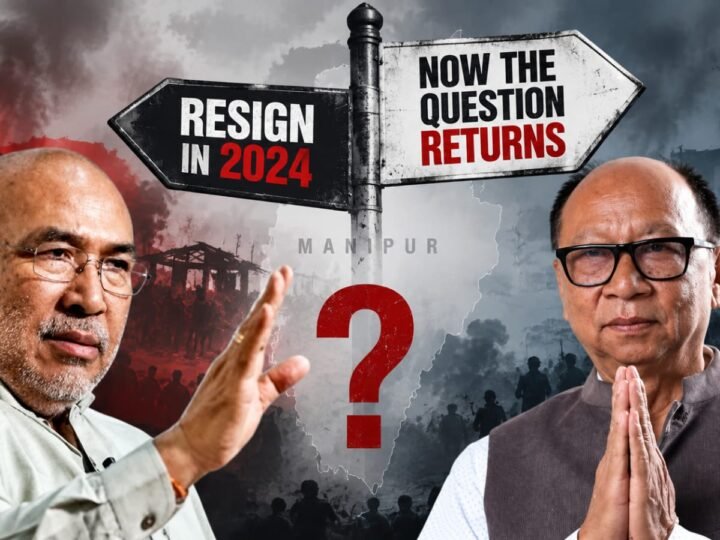
Nongthongbam Biren Singh left Imphal on August 24 following a reported call from the BJP’s central leadership. His journey came barely a week after he met Union Home Minister Amit Shah on August 17 and raised Manipur’s demand for updating the National Register of Citizens before the Census.
Yumnam Khemchand Singh left Imphal on August 25 amid reports that he would meet Amit Shah at 3 pm on Wednesday. The anticipated discussions are expected to cover the NRC, the Census and disruptions connected with the Census exercise.
Even the circumstances surrounding the Chief Minister’s visit require clarification. One report said he left following a call from Amit Shah, while a BJP legislator maintained that Khemchand had sought the appointment himself. Whether he was summoned or secured the meeting on his own initiative, the political meaning remains the same: the NRC-before-Census agitation has reached a level that Delhi can no longer manage through assurances issued from a distance.
The question is no longer whether Delhi knows what Manipur wants. The question is whether Delhi is prepared to decide.
Why was Biren called again?
Biren Singh had already placed the NRC demand before Amit Shah on August 17. After returning to Imphal, he said the Union Home Minister had responded positively and listened patiently to Manipur’s concerns. Yet, within days, Biren was called back to Delhi.
The second journey naturally invites questions. Was he called to provide further details about the NRC demand? Was the Centre seeking his assessment of the agitation? Was he asked to explain the political situation within the Manipur BJP? Or does Delhi want both the former and serving Chief Ministers to speak from a common position before a decision is announced?
No official explanation has yet answered these questions. What is clear is that Biren remains an important political voice within the BJP. His government adopted a Cabinet decision in 2023 supporting the NRC, and the Manipur Legislative Assembly also passed a resolution on the issue. He therefore carries the administrative and political history of the demand.
Khemchand, however, is now responsible for governing the State, managing the agitation and implementing whatever course Delhi eventually approves.
Calling both leaders may therefore indicate that the Centre wants to reconcile two kinds of political authority: the former Chief Minister’s ownership of the earlier NRC initiative and the serving Chief Minister’s constitutional responsibility for the Government of Manipur.
That is a reasonable inference. It should not be presented as confirmed fact until Delhi explains the purpose of the consultations.
A movement Delhi cannot dismiss
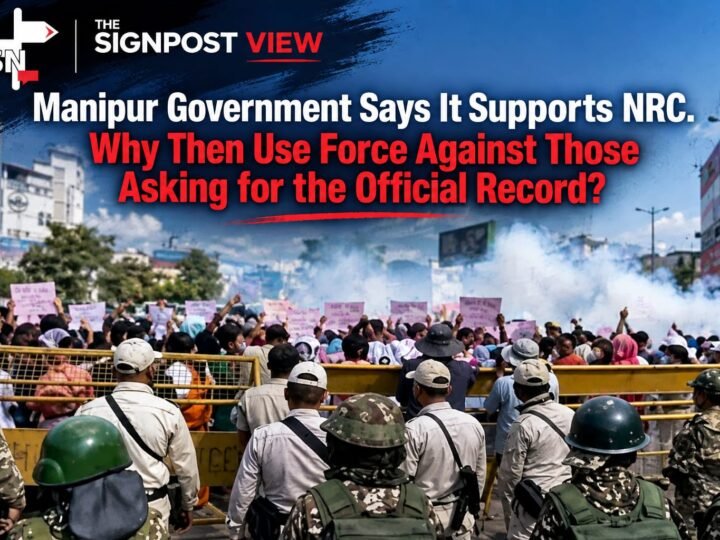
The NRC-before-Census demand is no longer confined to one organisation or one political leader. The Campaign for Just and Fair Delimitation (JFD), 14 CSOs, Imagi Meira, student organisations, other civil-society bodies and community representatives have carried the issue into streets, educational institutions, district offices and New Delhi. Protests and shutdowns have disrupted normal life. Students have suffered injuries during confrontations with police. Census-related activities have also been affected.
Governor Ajay Kumar Bhalla travelled to Delhi to brief the Centre. A delegation of ruling legislators, including State Home Minister Govindas Konthoujam, has also been camping in the national capital. Representatives of civil-society organisations have approached Central leaders.
Chief Minister Khemchand has assured students that the NRC issue will be placed for discussion during the Assembly session beginning on September 2. But another Assembly discussion cannot by itself deliver an NRC. The legal and administrative authority required for such an exercise ultimately involves the Union Government.
Manipur may pass resolutions, prepare records and demonstrate political consensus. Delhi must still decide whether it will authorise the process, what legal framework will be followed, what base year will be used and how genuine citizens will be protected from wrongful exclusion. That is why the meeting with the Union Home Minister matters.
One Government needs one clear position
The simultaneous presence of Biren and Khemchand in Delhi also reveals a political problem within the ruling establishment. Who speaks authoritatively for Manipur on the NRC?
Biren met Amit Shah and publicly reported a positive response. Khemchand has said his Government supports an error-free NRC but has also spoken about the practical and legal complexities involved. BJP legislators travelled separately to Delhi. Civil-society representatives organised their own mission.
All may support the broad demand, but multiple delegations and overlapping messages can create the impression that Manipur has several channels of authority without one officially communicated strategy.
Delhi must not use these multiple voices as an excuse to delay. Nor should the State Government depend upon the former Chief Minister, individual legislators or civil-society organisations to perform responsibilities that belong to the elected Government.
- After meeting Amit Shah, Khemchand must tell the people clearly:
- Whether the Centre has agreed to consider NRC before Census;
- whether the Census exercise in Manipur will continue, be modified or be deferred;
- what base year and documentary framework are being considered;
- whether an official Centre–State committee will be constituted;
- and when the public can expect a formal decision.
A statement that the meeting was “positive” will no longer be sufficient. Manipur has already heard that language many times.
More than an internal BJP meeting
Speculation about leadership equations, Cabinet expansion and the 2027 Assembly election will inevitably accompany any meeting involving Biren, Khemchand and the BJP’s central leadership. But reducing the Delhi visits to an internal BJP contest would overlook the immediate public crisis.
The NRC and Census questions are connected to citizenship, demographic representation, electoral boundaries and the political future of indigenous communities. Mistakes made now could influence delimitation and representation for decades.
At the same time, the process must be lawful, transparent and equipped with safeguards so that genuine Indian citizens are not excluded merely because they are poor, displaced or unable to produce one particular document. The demand for detecting illegal immigration and the obligation to protect legitimate citizens must operate together. One cannot be used to erase the other.
That requires a properly designed process—not slogans from Imphal and silence from Delhi.
Delhi must now answer
The Union Government has now heard Manipur’s concerns from a former Chief Minister, the serving Chief Minister, the Governor, State ministers, legislators, students and civil-society representatives. How many more delegations must travel before a formal response emerges?
If the Centre believes that NRC must precede the Census in Manipur, it should state the legal route and begin preparations. If it believes that the Census must proceed first, it must explain how allegedly irregular population entries will be prevented from influencing future delimitation. If it proposes some alternative verification mechanism, that too must be placed before the public.
Continued ambiguity will only deepen mistrust. The presence of both Biren and Khemchand in Delhi may signal that the Centre has finally recognised the urgency of the situation. It may also be an attempt to coordinate the BJP’s political response and prevent different leaders from issuing contradictory messages.
Either way, Manipur should judge the meeting by its outcome—not by photographs, assurances or descriptions of a “patient hearing.” Delhi has heard Manipur repeatedly. What the State needs now is not another consultation, but a decision.