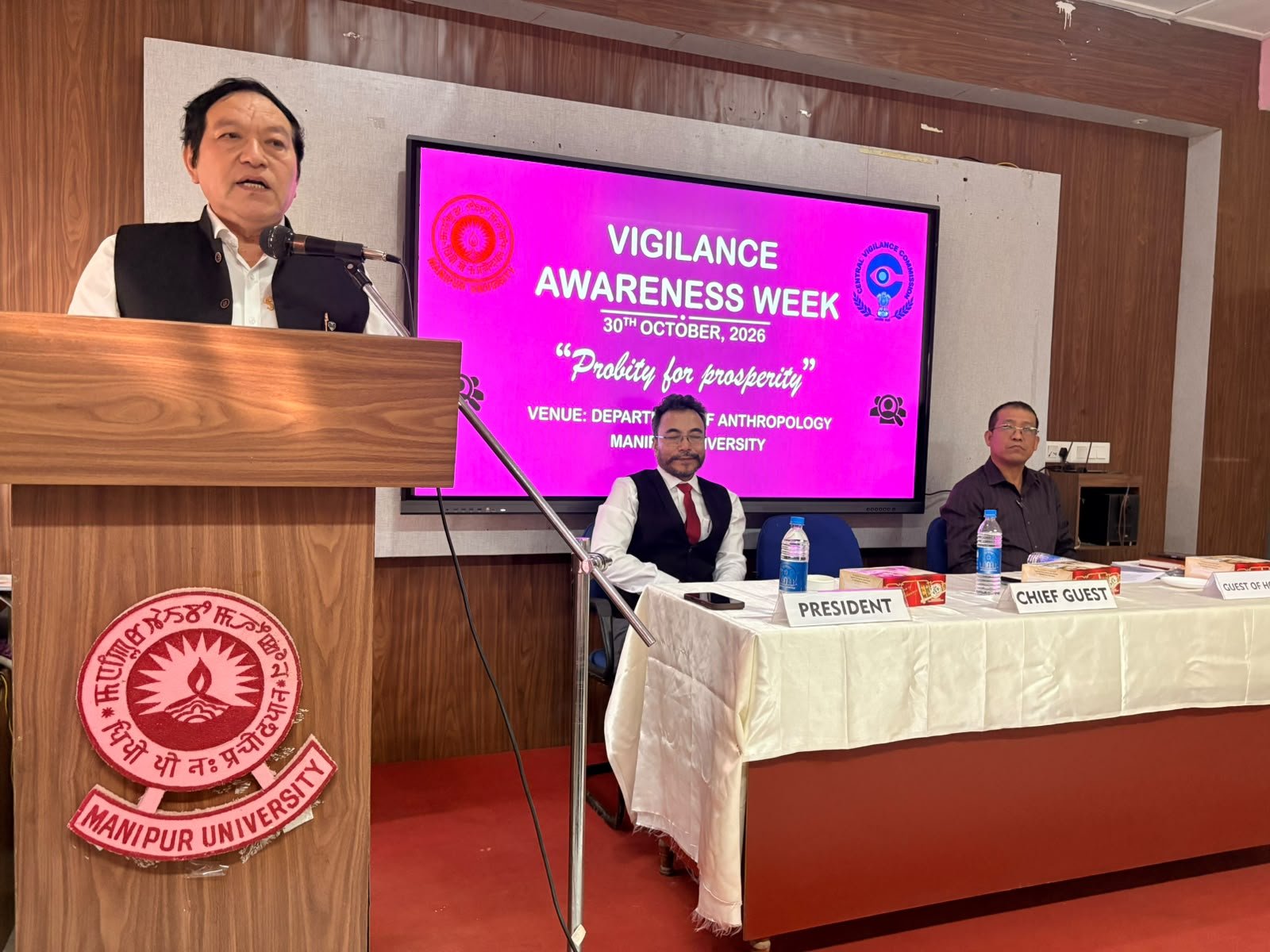
Imphal, October 30, 2026: Public accountability begins with completing pending work, using official time responsibly and giving students the guidance they need, Vice-Chancellor Prof. R.K. Hemakumar Singh said at Manipur University’s Vigilance Awareness Week programme on Friday.
Held at the Conference Hall of the Department of Anthropology under the theme “Probity for Prosperity,” the programme brought attention to the everyday responsibilities of teachers, officers and staff in maintaining trust in a publicly funded institution.
Prof. Hemakumar reminded employees that public expenditure, including their salaries, is supported by taxes paid by ordinary citizens, including daily-wage earners. That contribution, he said, places an obligation on University employees to discharge their duties sincerely and deliver services on time.
Urging employees to complete pending tasks instead of carrying them over to the next working day, he observed that unnecessary delays in processing files affect people who depend on the University’s services. Institutional credibility, he said, rests on the conduct the public and other stakeholders encounter in their dealings with the University.
The Vice-Chancellor also called for a more supportive learning environment. Students should be able to approach teachers, staff and officers for assistance, he said, appealing to teachers to recognise differences in learning pace and respond patiently to questions. Remarks that discourage students from seeking clarification should be avoided, he added.
Delivering the main address, Dr. Y. Premananda Singh, Head of the Department of Law, explained probity as adherence to high ethical standards through honesty, fairness, transparency and accountability in professional responsibilities.
He emphasised preventive vigilance, public participation and improvements in institutional systems as essential measures against corruption. Annual awareness programmes, he said, must produce sustained changes in conduct.
Discussing the connection between accountable governance and democratic participation, Dr. Premananda called for resistance to money power, muscle power and misinformation in elections. Responsibility for building a corruption-free society, he said, rests with institutions as well as individuals.
Earlier, Chief Vigilance Officer Prof. H. Vokendro Singh, in his welcome address, stressed that integrity must be reflected in the daily functioning of educational institutions.
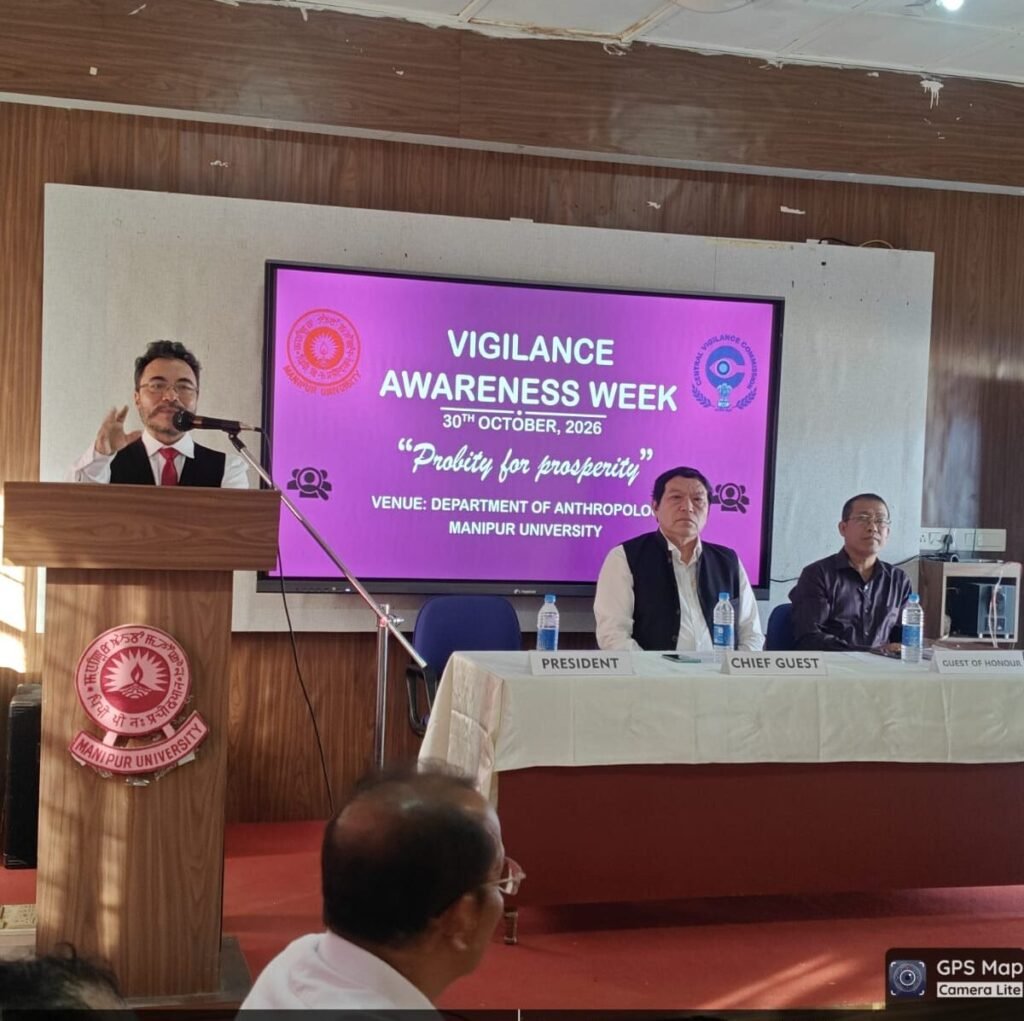
The ability to acquire knowledge and solve problems carries a responsibility to serve society, he observed. When intelligence is directed towards greed and personal gain, it can damage collective welfare, making ethical values, institutional rules and vigilance necessary safeguards.
Prof. Vokendro also underlined the importance of public awareness and scrutiny in preventing financial irregularities and the misuse of official authority. Integrity, he said, includes faithfully performing assigned duties: neglecting teaching or other responsibilities undermines students’ learning and the purpose of the institution.
Describing universities as “temples of learning,” he said teachers must uphold the trust society places in them. Students absorb values through the behaviour of their teachers as well as through classroom instruction.
He cautioned against placing responsibility for young people’s conduct entirely on students, noting that teachers, parents and the wider social environment influence the values they develop. He urged the University community to demonstrate honesty, sincerity and dedication through its own work.
The Vice-Chancellor led the integrity pledge during the Vigilance Awareness Week programme.
Proposing the vote of thanks, Associate Professor Dr. S. Yaiphaba Meitei described vigilance as a personal commitment to honesty, fairness and accountability. He thanked the speakers, organisers and participants, and acknowledged the media’s role in carrying the message of public responsibility to the wider community.