Two-day programme focuses on scientific breeding of Pengba and other native fish species as Manipur faces an estimated annual fish production shortfall of 19,500 metric tonnes.
Imphal, November 3, 2026: Manipur University has highlighted a ₹4-crore project to strengthen indigenous fish breeding and production in the state, as it launched a two-day capacity-building programme on sustainable aquaculture for Scheduled Caste (SC) farmers and entrepreneurs on Tuesday.
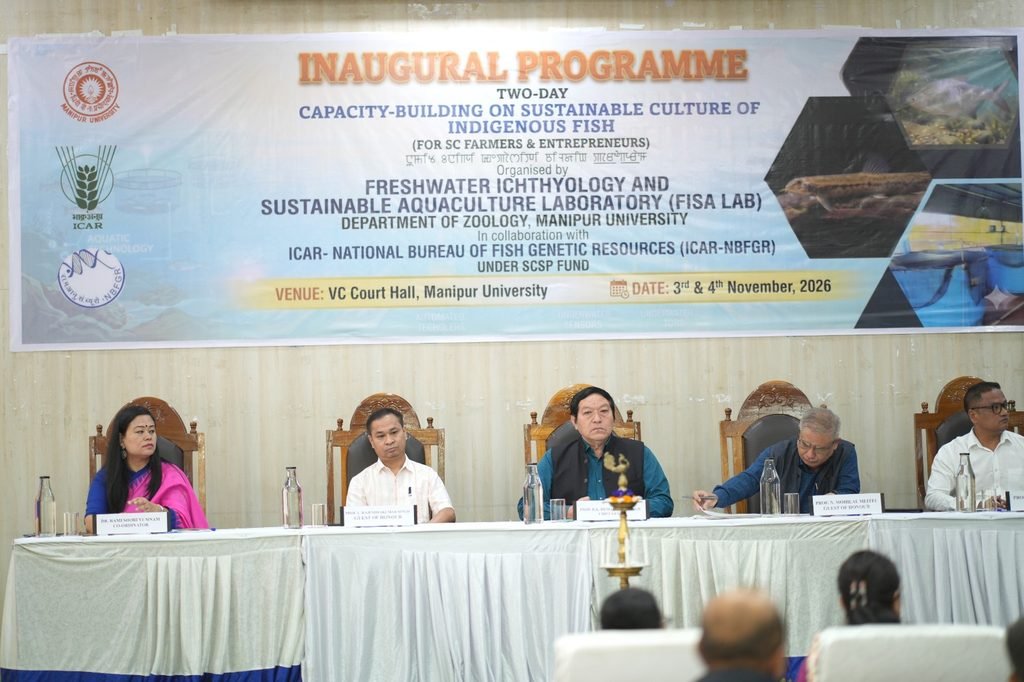
Organised by the Freshwater Ichthyology and Sustainable Aquaculture Laboratory (FISA Lab), Department of Zoology, in collaboration with the ICAR–National Bureau of Fish Genetic Resources (ICAR-NBFGR), Lucknow, the programme is being conducted under the Scheduled Caste Sub-Plan (SCSP).
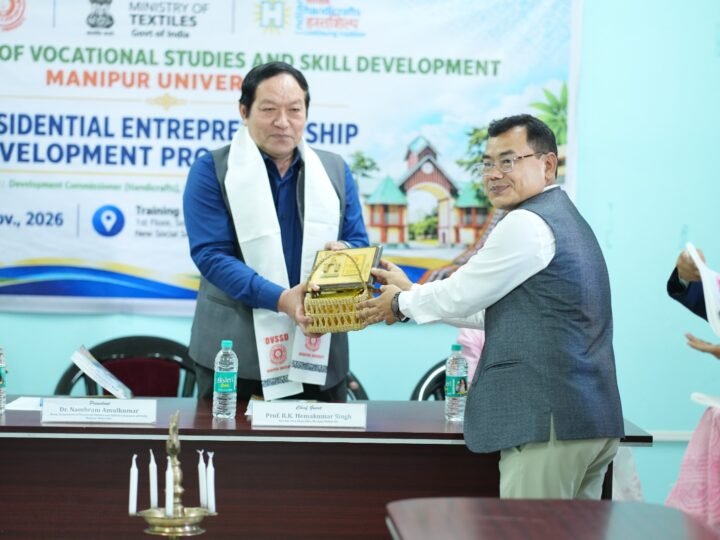
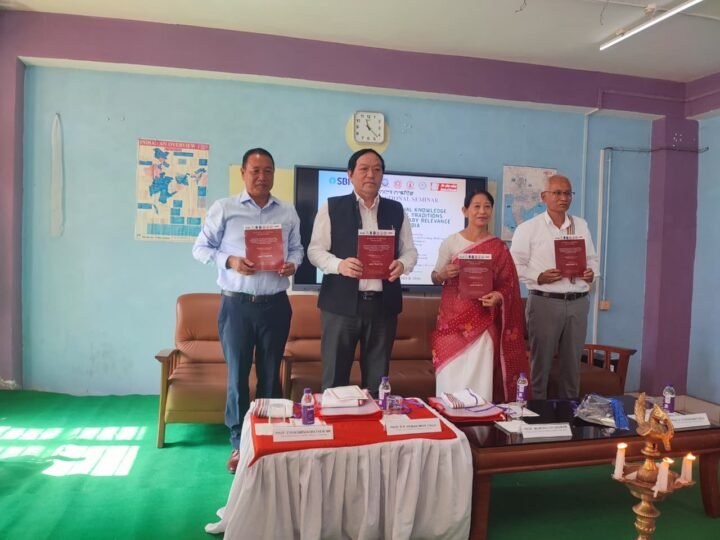
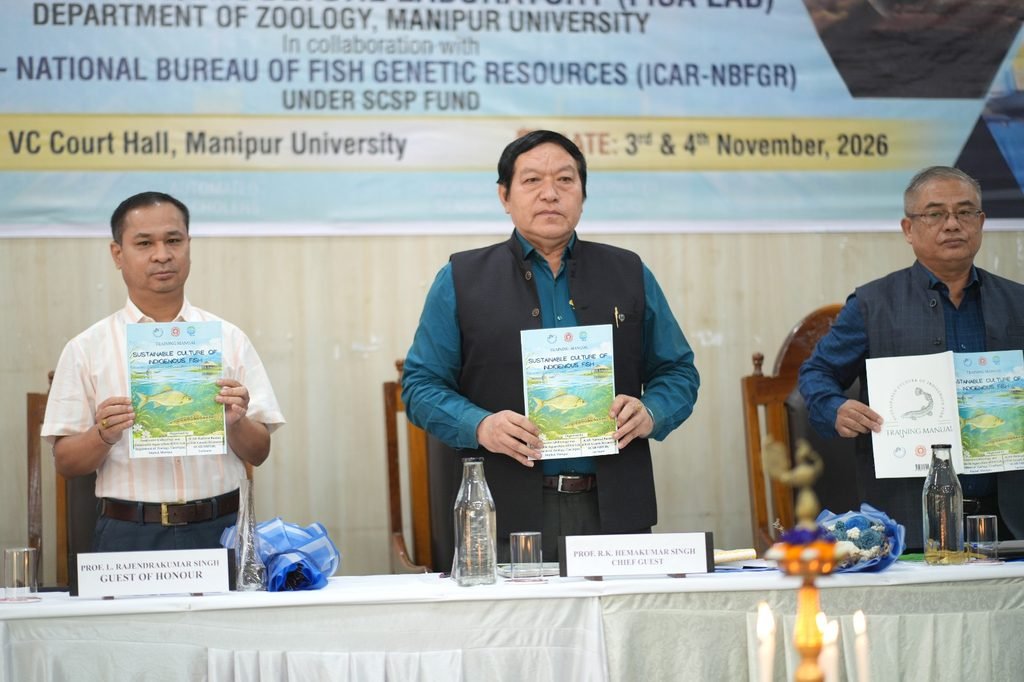
The programme commenced with the Manipur State Song, Sana Leibak Manipur, followed by the ceremonial lighting of the lamp, felicitation of dignitaries and release of a training manual.
The training, inaugurated at the VC Court Hall, Manipur University, Canchipur, aims to equip farmers with scientific knowledge of indigenous fish breeding, pond management and sustainable culture practices while creating livelihood opportunities and supporting the conservation of Manipur’s freshwater biodiversity.
₹4-Crore Project to Strengthen Indigenous Fish Production
Delivering the welcome address, Programme Co-ordinator Dr. Rameshori Yumnam said Manipur University had secured a centrally sponsored project worth approximately ₹4 crore under the Pradhan Mantri Matsya Sampada Yojana (PMMSY) to develop infrastructure for indigenous fish breeding and production.
The project, proposed for implementation over two years, seeks to strengthen breeding facilities, standardise culture practices and facilitate fish seed production. The longer-term objective includes making fish seed available to local farmers at subsidised rates.
Dr. Rameshori drew attention to Manipur’s dependence on fish imports despite the state’s substantial freshwater resources.
According to the figures presented by her, Manipur faces an annual fish production shortfall of approximately 19,500 metric tonnes, requiring supplies from states such as Andhra Pradesh, Assam and West Bengal. She estimated that around ₹400 crore flows outside Manipur to meet its fish demand.
The figures underline the economic importance of expanding local fish production, particularly through species that can be cultured sustainably under Manipur’s environmental conditions.
Dr. Rameshori said Manipur has approximately 200 freshwater fish species, including around 40 endemic species. However, habitat destruction, deteriorating water quality, environmental degradation and the spread of invasive species have placed increasing pressure on native fish populations.
The training programme will focus particularly on Pengba (Osteobrama belangeri), Manipur’s State Fish, and Ngakrijou, both valued for their cultural significance, nutritional importance and commercial potential.
Highlighting their market demand, she said Pengba generally commands prices between ₹500 and ₹700 per kilogram, sometimes reaching ₹1,500 depending on the season. Ngakrijou, meanwhile, can fetch between ₹2,000 and ₹2,500 per kilogram.
She expressed hope that improved breeding techniques and scientific culture practices would increase the availability of indigenous fish, create income opportunities for farmers and reduce harvesting pressure on wild populations.
University Research Must Reach Farmers: Vice-Chancellor
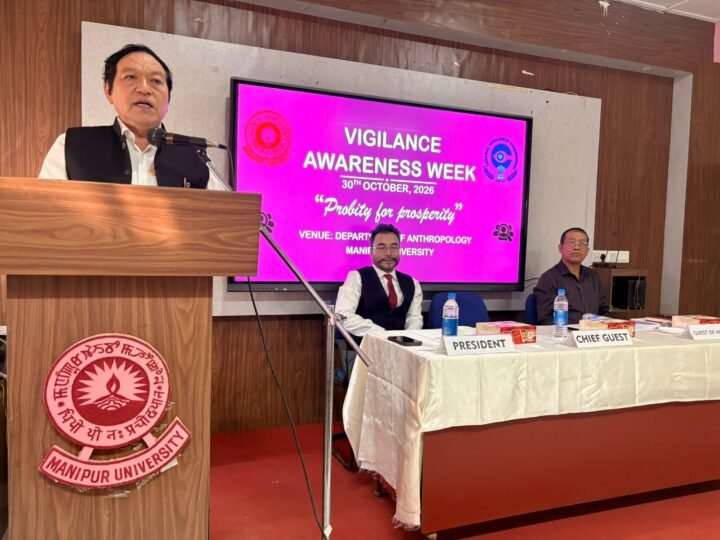
Inaugurating the programme as Chief Guest, Manipur University Vice-Chancellor Prof. R.K. Hemakumar Singh stressed that scientific research should not remain confined to university laboratories and classrooms.
He said academic institutions have a responsibility to ensure that research findings translate into practical benefits for society, particularly farmers and economically disadvantaged communities.
Appreciating the initiative taken by the Department of Zoology, the Vice-Chancellor urged university researchers to maintain contact with participating farmers even after the two-day training concludes.
He suggested that WhatsApp, video calls and other accessible communication platforms could help farmers obtain technical guidance from university experts when they encounter difficulties in fish rearing.
Researchers should also undertake field visits, examine conditions in farmers’ ponds and provide advice on water quality and other factors affecting fish production, he said.
Prof. Hemakumar observed that achieving even around 70 per cent of the programme’s intended objectives through practical implementation would constitute a meaningful beginning.
Emphasising that Manipur University belongs to the people, he said its knowledge, expertise and research infrastructure should contribute directly to their welfare.
He appreciated Dr. Rameshori and her team for bringing farmers and scientific experts together through the programme.
Indigenous Fish Linked to Manipur’s Food Culture
Speaking as Guest of Honour, Manipur University Finance Officer Prof. L. Rajendrakumar Singh highlighted the close relationship between indigenous fish, traditional food practices and the cultural life of Manipur.
He observed that the state’s communities had historically depended on lakes, wetlands, rivers and ponds for food and livelihoods. However, urbanisation, pollution, shrinking wetlands and declining fish populations have weakened this relationship.
He expressed concern over Manipur’s increasing dependence on fish brought from outside the state and its implications for the local economy.
According to Prof. Rajendrakumar, indigenous fish are associated not only with everyday meals but also with traditional dishes, religious ceremonies and customary practices.
Their decline, he observed, would therefore represent both a loss of biodiversity and an erosion of cultural heritage.
He appreciated the work undertaken by Dr. Rameshori and her research team in developing breeding techniques and prototype models that could be adapted to local ponds and smaller water bodies.
He also encouraged farmers and entrepreneurs to explore opportunities in affordable fish feed production, processing, value addition and marketing to improve earnings from aquaculture.
Role of Native Fish in Aquatic Ecosystems
Prof. Naorem Mohilal Meitei, Dean, School of Life Sciences, said greater attention to indigenous fish species was necessary as aquaculture had long depended heavily on exotic species.
He pointed out that native fish play important roles in aquatic ecosystems, food security, traditional diets and local economies.
Promoting their sustainable culture, he said, could support biodiversity conservation, economic self-reliance and the development of the blue economy.
Prof. Mohilal also emphasised the importance of connecting classroom knowledge with farmers’ practical requirements and making participants aware of relevant government schemes and institutional support.
Presiding over the inaugural function, Prof. Ksh. Birla Singh, Head of the Department of Zoology, described indigenous fish culture as an area where scientific skill development could address challenges relating to employment, food security and climate change.
He said practical skills were increasingly important for livelihood development and encouraged farmers to make full use of their interactions with scientists and resource persons.
Highlighting the need to protect locally important species, he called for greater efforts to promote the sustainable culture of Pengba, Ngakichou, Ngamu and Meitei Sareng before their natural populations decline further.
Farmers Receive Fish Seed and Water-Quality Testing Kits
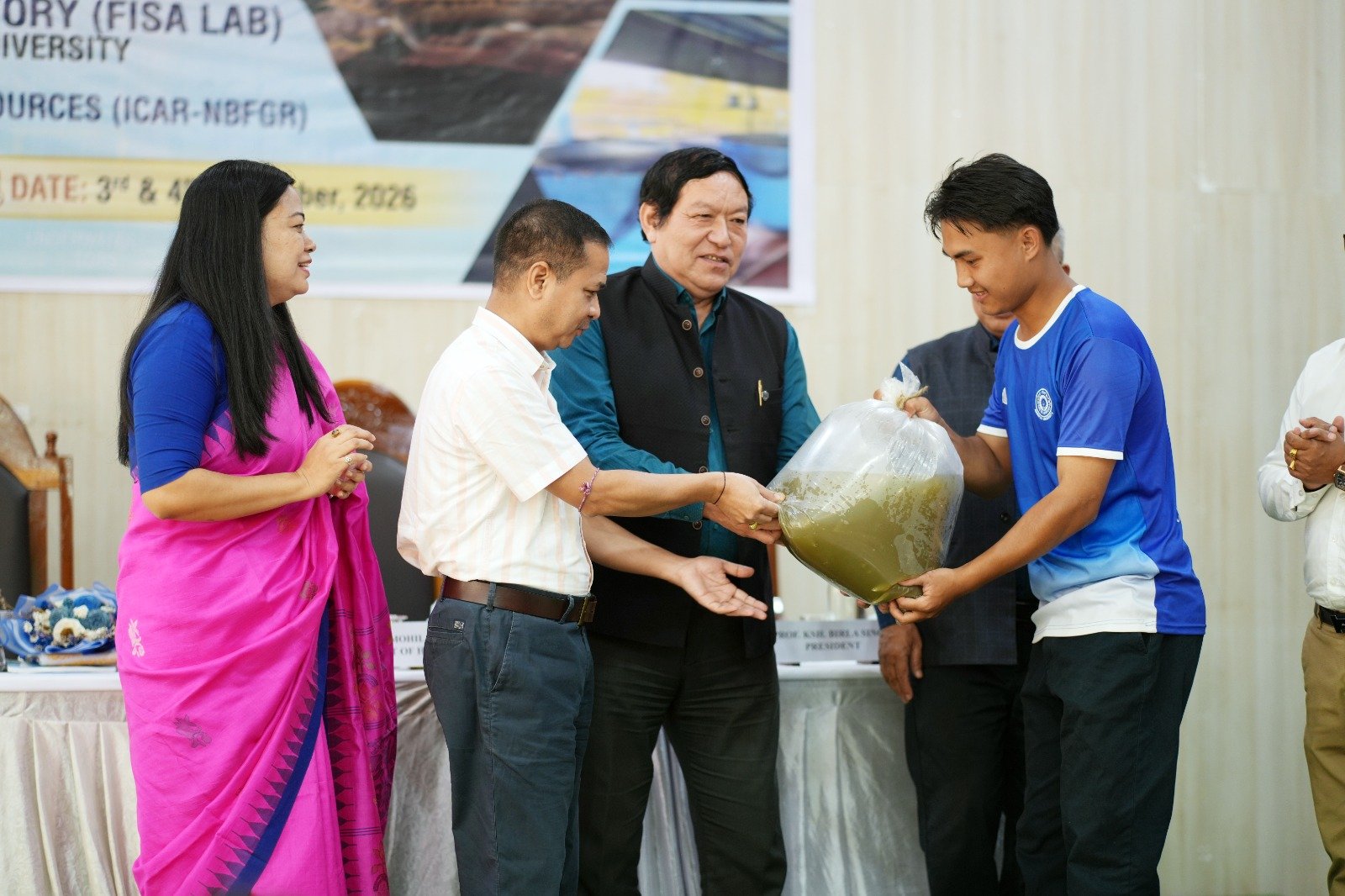
As part of the programme, participating farmers were provided with fish seed, fish and testing kits for monitoring oxygen levels and water quality.
The practical inputs are intended to help farmers apply scientific fish-rearing techniques, assess conditions in their ponds and improve aquaculture management.
The two-day programme brings together scientists, researchers, farmers and entrepreneurs for technical discussions and practical learning on indigenous fish breeding, conservation and sustainable culture practices.
The inaugural function was attended by Prof. N. Mohilal Meitei and Prof. L. Rajendrakumar Singh as Guests of Honour, with Prof. Ksh. Birla Singh presiding.
A training manual was also released during the programme.
The inaugural function concluded with a vote of thanks proposed by Dr. Maisnam Manorama Devi, Assistant Professor, Department of Zoology, Manipur University, followed by the National Anthem.
The initiative brings attention to a larger challenge facing Manipur: how to strengthen domestic fish production while conserving native species that form an important part of the state’s food traditions and aquatic biodiversity.