Experts urge candidates to reject intimidation, excessive spending, political interference and personal hostility during student union polls
Imphal, September 17, 2026: Manipur University on Thursday called for a peaceful, transparent and issue-based election to the Manipur University Students’ Union, with experts urging candidates and voters to keep money power, intimidation, personal attacks and external political influence away from the campus.
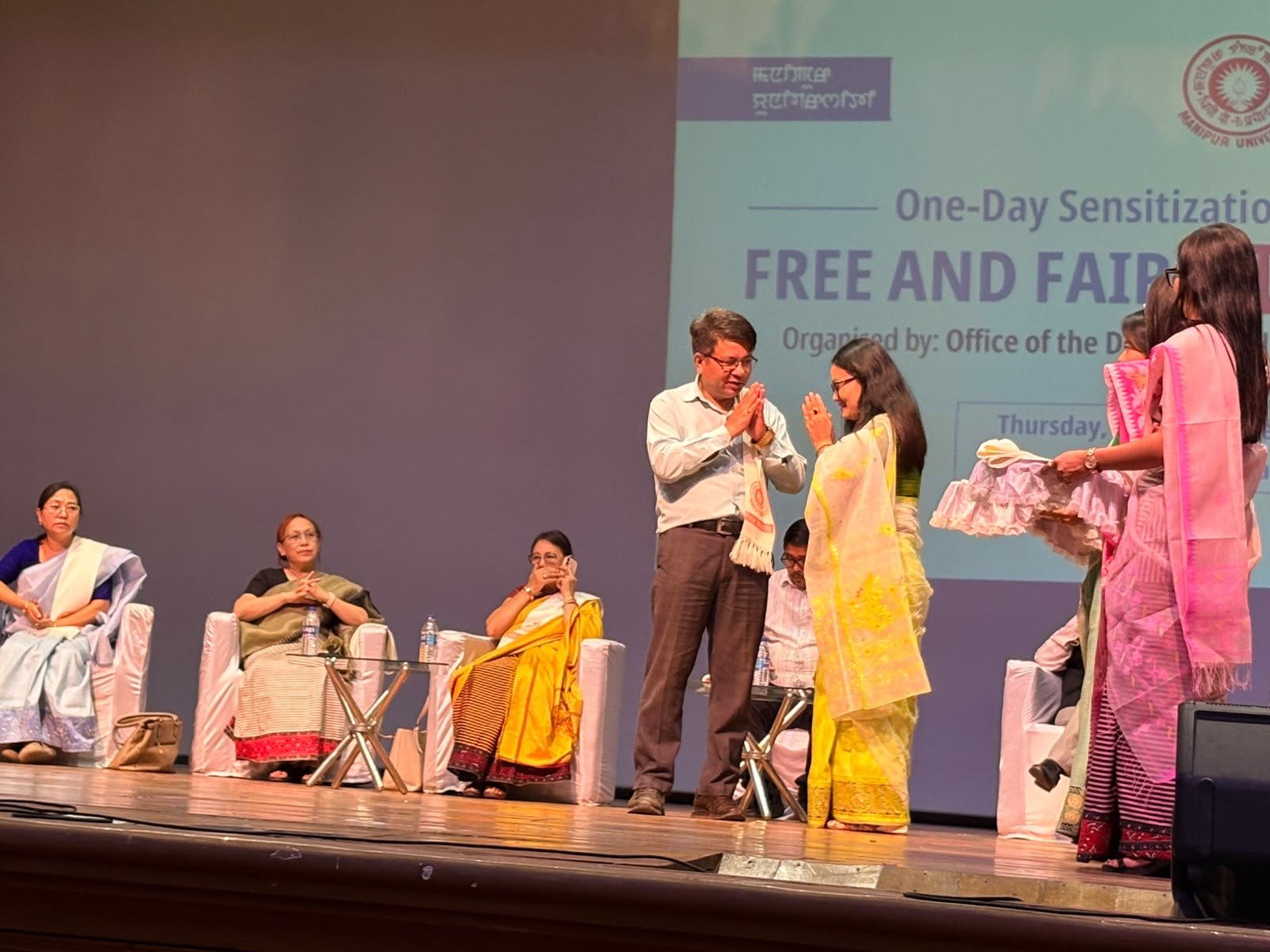
The call was made during a one-day sensitization programme on “Free and Fair MUSU Elections” organised by the Office of the Dean of Students’ Welfare at the University Auditorium.
Addressing the programme, Prof. Ch. Ibohal Singh, Dean of Students’ Welfare, said the revival of MUSU had made it necessary for the University community to reflect seriously on how student elections should be conducted.
He said a legitimately elected students’ union could play an important role in representing students and contributing to the academic and institutional development of Manipur University.
Prof. Ibohal appealed to candidates and their supporters to conduct peaceful campaigns without personal attacks, intimidation or unnecessary expenditure. Referring to campaign materials displayed at different locations on the campus, he said a notice had been issued asking those concerned to remove unauthorised posters and banners within 48 hours and help maintain the cleanliness of the University.
He said Manipur University had an important role in shaping the future of the State and that MUSU must emerge as a responsible stakeholder in this larger process.
Warning Against Political Interference
Senior Advocate Khaidem Mani Singh, former Chairperson of the Manipur State Human Rights Commission, described elections as an essential part of democracy and discussed the strengths and limitations of India’s first-past-the-post electoral system.
Connecting free and fair elections with the freedoms guaranteed under Article 19 of the Constitution, he said students must be allowed to exercise their choices and participate in democratic organisations without undue pressure.
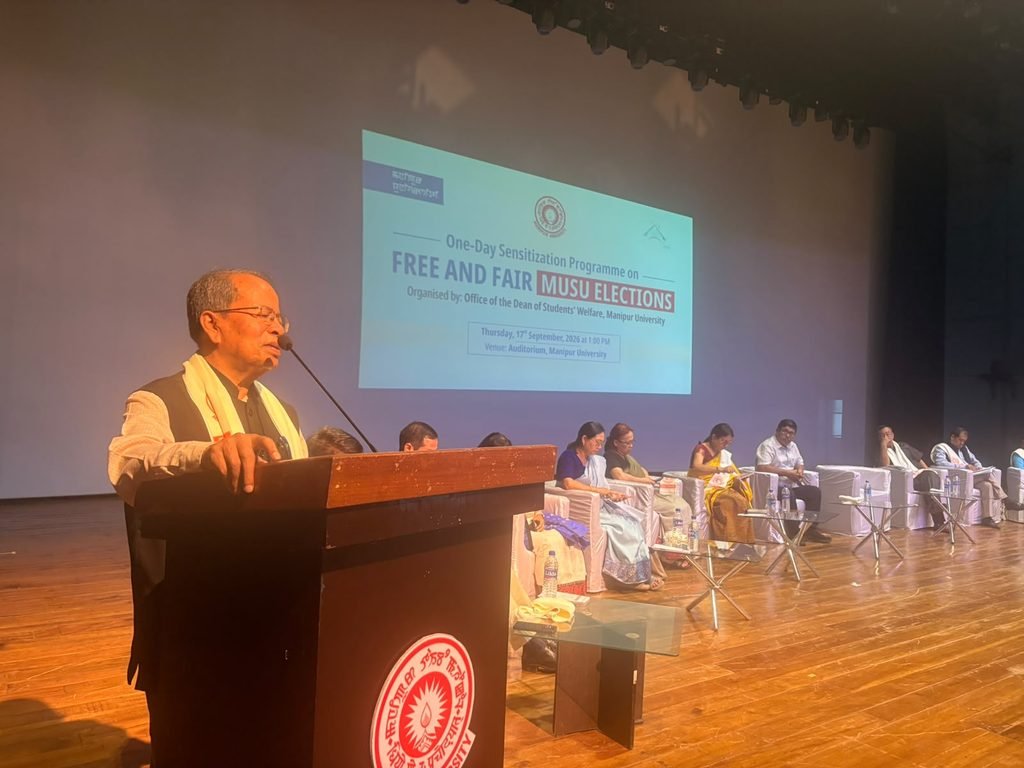
Khaidem Mani cautioned against money power, muscle power and the indirect involvement of political parties and their student wings in university elections.
Student organisations, he said, must remain focused on the interests of students and the University instead of becoming instruments of political forces operating outside the campus.
Campus Election Is the First School of Democracy
Social scientist Dr. Dhanabir Laishram described the university election as the “first school of democracy,” saying good governance and responsible political participation should begin on the campus.
He underlined the need for clear election rules, equal opportunity for candidates, self-discipline among participants and respect for the secrecy of the ballot and the final result.
Students should examine a candidate’s honesty, character, understanding of public issues, knowledge of the history of the land, administrative ability and familiarity with the Constitution and the law before casting their votes, he said.
Dr. Dhanabir said students who learn to make informed choices during campus elections would also be better prepared to participate responsibly in Assembly, parliamentary and other public elections in the future.
MU Election Should Become a Model
Dr. Yumnam Premananda Singh, Head of the Department of Law, said a free election must provide voters with a genuine choice, while a fair election must ensure equality and freedom from bias.
He stressed the importance of the secret ballot, a clearly defined Model Code of Conduct and strict adherence to the Constitution of the Manipur University Students’ Union.
He also called for proper scrutiny of the academic attendance, antecedents and disciplinary records of candidates.
Campus elections should be conducted without excessive expenditure, he said, adding that Manipur University should develop an electoral model that could later be followed by affiliated colleges and other educational institutions.
Prof. M.C. Arunkumar, Dean of the School of Human and Environmental Sciences, said freedom in an election meant the ability to cast one’s vote voluntarily, knowingly and without outside pressure.
Voters, he said, should be able to choose not only between individuals but also between ideas, values and programmes. Candidates, voters and campaigners must place the interests of Manipur University, the student community and society above narrow personal considerations.
Prof. Prof. Premlata Maisnam also addressed the gathering and stressed the importance of conducting the MUSU election in a disciplined, transparent and responsible manner. Meaningful student participation, she said, should contribute to democratic values, academic development and a constructive environment within the University.
‘Election Is a Competition of Ideas, Not Power’
Prof. Khelena Gurumayum, Head of the Department of Political Science, described the MUSU election as a “laboratory of democracy” where students learn how to contest, vote, campaign, debate, express their preferences and accept electoral outcomes.
She said elections were not merely about choosing representatives but also about democratic responsibility.
An election is free when voters can exercise their choice without fear, pressure, coercion or intimidation, while it is fair when every candidate and voter is governed by the same rules, she said.
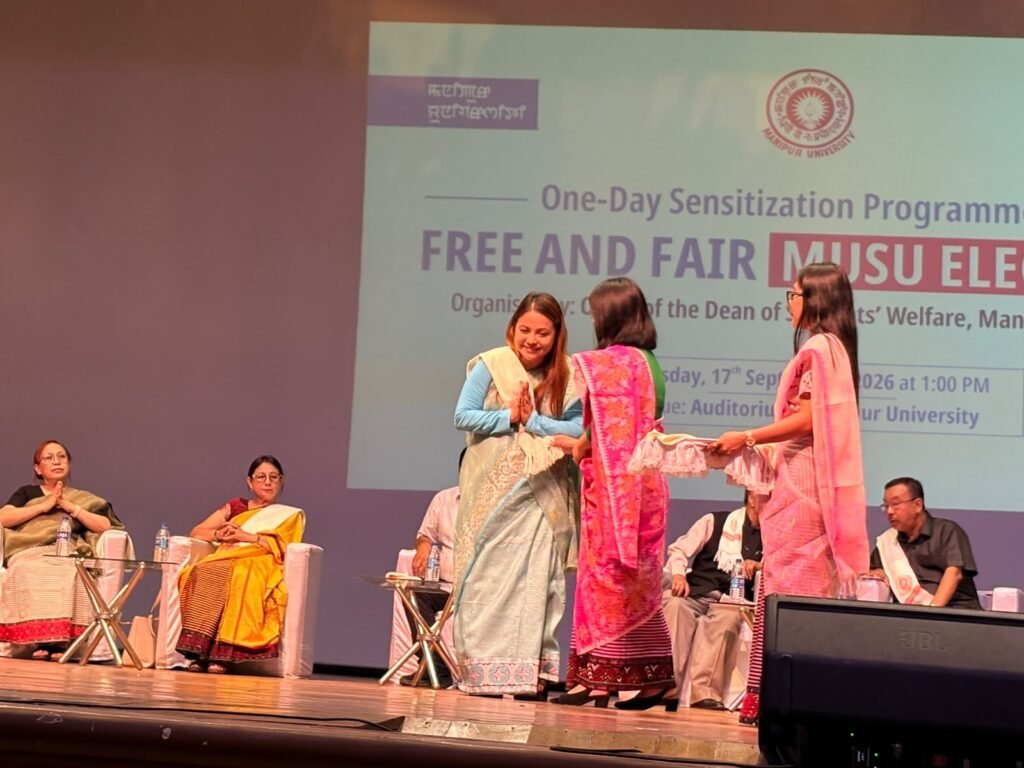
Appealing to the candidates, Prof. Khelena said the MUSU election should be a competition of ideas and not a struggle for power. Candidates should clearly tell students what they stand for and make realistic commitments on students’ welfare, mental well-being, gender equality and improvement of the campus.
She reminded the candidates that an electoral opponent was not an enemy and that political competition should not be allowed to turn into personal hostility.
Candidates, she said, could campaign strongly without using abusive language, resorting to violence or damaging the University environment.
Prof. Khelena also said accepting defeat gracefully was as much an expression of leadership as winning an election.
“Let us have an election where ideas are stronger than money and arguments are stronger than abuses,” she said.
She added that a free and fair election was not created only on polling day but through the conduct of every participant throughout the electoral process. Candidates and voters must act responsibly, the election authority must remain impartial, and the University community must collectively protect the democratic character of the institution.
The presidium members included Prof. Premlata Maisnam, Dean, School of Education; Prof. Kananbala Sarangthem, Dean, School of Agricultural Sciences; Prof. Toijam Tampha Devi, Dean, School of Humanities; Prof. R.K. Lonibala, Dean, School of Mathematical and Physical Sciences; Prof. N. Basanta Singh, Dean, School of Engineering; Prof. N. Rajen Singh, Proctor; Prof. Laishram Rajendrakumar Singh, Finance Officer; and Prof. Ch. Ibohal Singh, Dean of Students’ Welfare.
The programme concluded after an interactive session involving the invited experts, presidium members and participating students. Dr. Huidrom Suraj Singh proposed the vote of thanks.